China Top Pressure Vacuum Relief Valve Manufacturers?
Choosing among China’s Pressure Vacuum Relief Valve manufacturers requires more than comparing prices or polished product sheets. These valves protect tanks from excess pressure and vacuum during filling, withdrawal, and temperature changes. A poorly matched setting can cause leakage, deformation, or unnecessary venting. Small details matter: seat materials, flange dimensions, set pressures, flow capacity, and test records. Ask how each manufacturer verifies performance under the conditions your tank will actually face.
Process-safety author Daniel A. Crowl’s work supports a practical principle: relief protection should reflect credible operating conditions, not convenient assumptions. That is a paraphrase, not a direct quotation. It is still a useful lens for evaluating suppliers. Request material certificates, capacity calculations, inspection procedures, and clear guidance on installation and maintenance. Check whether the supplier can explain its choices in plain language. A confident answer matters. So does a careful one.
This comparison should also consider communication, lead times, customization, and after-sales support. A low quotation may omit testing or documentation. A familiar brand may not suit every service. And a neat catalog cannot replace engineering review. There is no universal winner; the right manufacturer depends on the tank, process, and operating environment. Even a thorough shortlist can miss something. Treat this guide as a starting point, then verify each technical claim against your project requirements.
What Pressure Vacuum Relief Valves Do and Where They Are Used
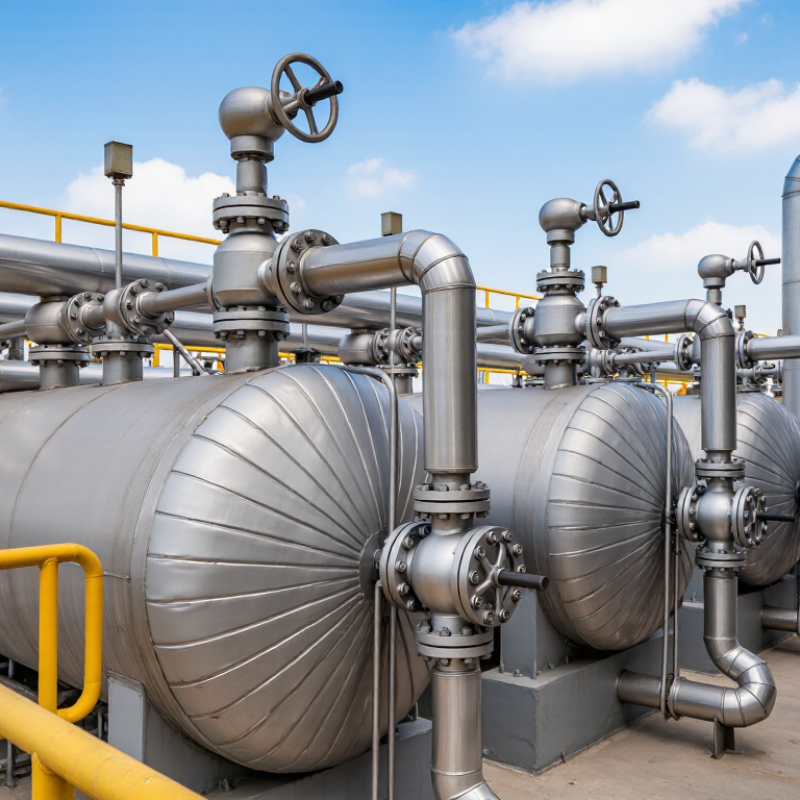
Pressure vacuum relief valves protect low-pressure storage tanks from excessive pressure and vacuum. During filling, vapor space is compressed; during withdrawal, it can collapse inward. Temperature swings also make stored liquid and vapor expand or contract. The valve opens at a set point, releasing or admitting gas to help prevent tank damage and limit avoidable vapor loss. Small valve, large role.
They are commonly fitted to tanks holding petroleum products, solvents, chemicals, and treated water. EPA’s AP-42, Chapter 7.1, explains that storage-tank emissions include working losses from liquid movement and breathing losses from temperature and pressure changes. EIA’s 2024 storage-capacity report puts U.S. crude-oil working capacity at roughly 1.3 billion barrels, illustrating the scale of tank infrastructure that needs sound pressure management. That figure is not a valve-sizing guide.
Correct selection depends on tank design pressure, product properties, filling and withdrawal rates, and vent piping. API 2000 and ISO 28300 provide recognized guidance for venting atmospheric and low-pressure tanks. A frequent oversight is treating the valve as a stand-alone safeguard. Blocked vents, poor maintenance, or incorrect settings can undermine protection. Sizing is not guesswork. Check operating conditions and inspect the installation.
How Pressure Vacuum Relief Valves Work
A pressure vacuum relief valve, or PVRV, lets a storage tank breathe while limiting pressure changes. When vapor pressure rises above the valve’s set point, a weighted or spring-loaded pallet lifts and releases gas. When pressure falls, a separate vacuum pallet opens, allowing air or an approved gas to enter. It must breathe. The two openings respond independently, so one blocked path can still leave the tank vulnerable.
API Standard 2000 covers venting for atmospheric and low-pressure storage tanks, including tanks operating from full vacuum to 15 psig (about 103 kPa gauge). That range describes the standard’s scope, not a recommended valve setting. Set points and capacity must match the tank’s design and expected flow. The U.S. EPA’s AP-42, Chapter 7.1, distinguishes standing losses from working losses as liquid levels change. Those changing conditions matter when estimating vapor release and sizing vents.
In practice, a technician checks the valve seat, pallet movement, and vent opening for dirt or sticking. A small deposit can change how freely the pallet lifts. Flame arresters and long vent lines can also add resistance, so the installed system needs review—not just the valve’s catalogue capacity. The calculation is easy to underestimate; real tank breathing is less tidy.
Key Criteria for Evaluating Chinese Manufacturers
A Chinese pressure vacuum relief valve manufacturer should be assessed on engineering evidence, not catalogue claims. Start with design records: set-pressure tolerances, flow-capacity calculations, material grades, and documented inspection steps. API Standard 2000 provides recognized guidance for venting atmospheric and low-pressure storage tanks. Ask how the supplier applies its sizing methods to your actual tank conditions, including fluid properties and operating temperature.
Request recent test reports showing set pressure, reseating behavior, and leakage results. Check that serial numbers connect each valve to its material certificates and inspection records. For a DN100 valve, for example, compare the certified flow data with the required vent rate; a matching connection size alone proves little. The ISO Survey 2022 reported more than 1.26 million ISO 9001 certificates worldwide. That figure highlights why certification is only a starting point, not proof of product performance. Review the certificate’s scope and validity, then inspect sample records or arrange a factory audit. Paperwork can still mislead. Ask about calibration intervals, rejected batches, and corrective actions; a supplier’s willingness to discuss gaps can be more informative than a polished brochure.
Leading Chinese Manufacturers and Their Product Capabilities
China Top Pressure Vacuum Relief Valve Manufacturers?
Chinese manufacturers of pressure vacuum relief valves serve storage tanks and process systems where pressure balance matters. Their capabilities vary, so buyers should compare engineering support and test evidence, not just catalog breadth. A detailed drawing helps. It can confirm connection sizes, materials, and installation clearances before a valve reaches the site.
Leading producers may offer different valve configurations, including options for varied set pressures and operating conditions. Common construction choices include stainless steel and carbon steel, but material suitability depends on the stored medium and environment. Ask how the manufacturer verifies pressure settings, sealing performance, and repeatability. Request inspection records for the specific model, rather than relying only on general product descriptions.
Manufacturing capacity is only part of the picture. Check whether the supplier can explain sizing assumptions and provide clear maintenance instructions. Response times for technical questions also matter, especially when specifications change late. A polished brochure can be reassuring; it cannot replace a careful review. Sometimes the available documentation is incomplete, and that deserves a follow-up before purchase.
Pressure–Vacuum Relief Valve Setpoint Conversion Reference
The bars show equivalent gauge-pressure magnitudes using 1 psi = 6.89476 kPa. The same conversion applies to vacuum setpoints when expressed as the magnitude of negative gauge pressure. These selected reference points are not manufacturer specifications, product ratings, or a market comparison.
How to Verify Suppliers and Choose the Right Manufacturer
For a China-based pressure and vacuum relief valve supplier, verify evidence before comparing prices.
Grand View Research’s 2023 Pressure Relief Devices Market report forecasts continued market growth, but rising demand alone does not prove a supplier’s competence. Ask for the exact model’s certified set pressures, flow-capacity test results, materials list, and inspection records. Check that the documents match the nameplate and your tank’s operating conditions.
Paperwork matters.
Request a witnessed test or a recent, traceable test report. Confirm the test medium, pressure range, calibration dates, and acceptance criteria; a certificate without these details is weak evidence. API Standard 2000 provides guidance on venting atmospheric and low-pressure storage tanks, so compare the supplier’s sizing assumptions with your process data. Also inspect sealing surfaces, pallet movement, and corrosion protection in person or through clear inspection images. A factory audit helps, but it cannot replace service references from similar applications.
This check is not perfect.
Even a strong supplier may need clarification on unusual vapors, cycling, or temperature swings. Record open questions, then evaluate response quality alongside price and delivery time.
 North American Safety Valve Industries, Inc.