China Best Industrial Valve Manufacturers Suppliers

China’s industrial valve sector is becoming more visible across energy, water treatment, chemicals, food processing, and advanced manufacturing. Grand View Research estimates that the global industrial valves market was valued at approximately USD 79 billion in 2023, with continued growth expected through 2030. Demand is not driven by price alone. Leakage control, material compatibility, pressure stability, delivery consistency, and after-sales support increasingly influence purchasing decisions.

The Valve Manufacturers Association states that industrial valves support essential flow-control systems across multiple process industries. As valve engineer and author Richard W. Greene observed, “A valve is only valuable when it performs reliably in its actual service.” This practical point matters when comparing China Best Industrial Valve Manufacturers Suppliers. A polished catalog cannot replace verified testing.

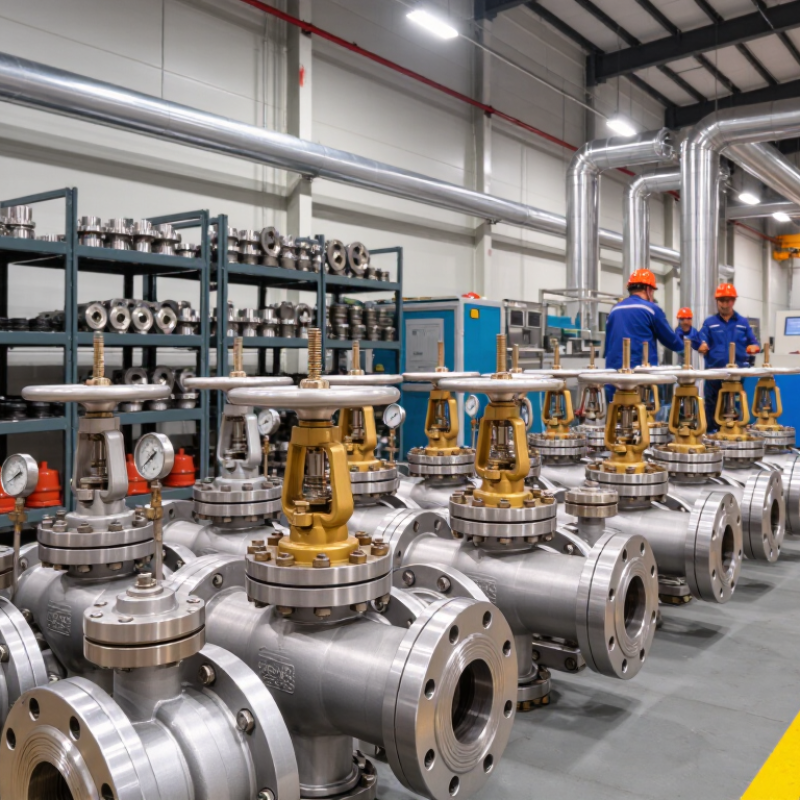
Strong suppliers should provide traceable materials, pressure-test records, dimensional drawings, and clear quality procedures. Look for evidence involving API, ASME, ISO, or other applicable standards. Site audits can reveal details that websites hide: clean machining areas, labeled steel grades, calibrated test benches, and organized spare-parts storage. These small signs often matter.

However, no supplier ranking is permanently accurate. Market conditions change. Factory capacity may vary. Some published market figures also use different product definitions, which makes direct comparison imperfect. Buyers should check current certifications, references, inspection results, and total operating cost before signing contracts. The cheapest Industrial Valve may become expensive after repeated maintenance, delayed shipments, or premature replacement. Supplier selection requires evidence, not confident promises.
China Best Industrial Valve Manufacturers Suppliers

Industrial Valve Manufacturing in China: Industry Overview

Industrial valve manufacturing in China has moved beyond low-cost casting. Its ecosystem connects foundries, machining workshops, sealing suppliers, testing laboratories, and export logistics. Grand View Research estimates the global industrial valves market reached about USD 78 billion in 2023. The report expects steady growth through 2030, supported by water treatment, energy, chemical processing, and infrastructure projects. China remains a major production base because it offers broad machining capacity and flexible batch sizes.

Tips: Request heat-number traceability, dimensional reports, and pressure-test records. Check whether testing follows ISO 5208 or another accepted standard. Ask for material certificates before shipment, not after a problem appears. A clear inspection plan should cover casting quality, bore size, flange dimensions, coating thickness, and actuator settings.

Practical audits often reveal more than online catalogs. Inspectors should compare approved drawings with finished valves on the factory floor. Stainless steel and alloy parts deserve independent verification. Some workshops still depend on handwritten records. That creates avoidable gaps. Market forecasts also vary between research firms, so buyers should not treat one figure as absolute. This is an imperfect process. Supplier evaluation should combine report data, factory evidence, sample testing, and after-sales response. Delivery history matters too, especially for large valves used in remote pumping stations or high-pressure pipelines.
China Industrial Valve Manufacturing: Export Trend

China's export value for taps, cocks, valves and similar appliances increased substantially between 2019 and 2022 before moderating in 2023. The figures are reported under HS 8481 and include industrial, commercial and household valve products.

Unit: US$ billion. Figures are rounded annual export values for HS 8481. Source: UN Comtrade international trade statistics.

Key Valve Types and Their Industrial Applications

China Best Industrial Valve Manufacturers Suppliers

Industrial valves control pressure, flow, temperature, and direction in demanding plants. Gate valves provide low-resistance isolation in pipelines. Ball valves shut flow quickly with a quarter-turn action. Butterfly valves suit large, lower-pressure lines where compact design matters. Globe valves offer finer throttling, especially around boilers, pumps, and process skids.

Check the service conditions first. A stainless-steel ball valve may handle corrosive chemicals, while a lined butterfly valve can protect against aggressive media. Check pressure class, temperature range, seal material, and actuator torque. Small details matter. A valve that fits the pipe may still fail through poor cavitation control or incorrect sizing.

Grand View Research estimated the global industrial valves market at about USD 78 billion in 2023, with continued growth through 2030. MarketsandMarkets projected the control valve market to rise from roughly USD 7.5 billion in 2023 to USD 10.7 billion by 2028. These figures reflect expanding water treatment, energy, chemical, and manufacturing projects. Yet market forecasts are not field proof. In my experience, verified material certificates, pressure tests, cycle testing, and traceable inspection records offer stronger evidence. Manufacturers and suppliers should also explain failure limits honestly. No valve is universal. A cheaper selection can become expensive when leakage, downtime, or maintenance access is overlooked.

Criteria for Evaluating Chinese Valve Manufacturers and Suppliers

China Best Industrial Valve Manufacturers Suppliers

Evaluating Chinese valve manufacturers requires more than comparing prices. Start with documented experience in your industry and pressure range. Ask for project references, production records, and clear material specifications. A reliable supplier should explain why a valve body uses carbon steel, stainless steel, or another alloy. Vague answers deserve caution.

Factory verification matters. Review machining equipment, assembly areas, calibration records, and pressure-test procedures. Request test certificates linked to batch numbers, not loose documents. Check whether inspectors measure wall thickness, seat leakage, and flange dimensions. Certification should match the valve’s intended market and application. It should never be treated as decoration.

Supply reliability also depends on communication. Confirm drawings, delivery dates, spare parts, warranty terms, and response times in writing. A capable technical team can discuss torque, temperature limits, sealing materials, and installation conditions. Samples should be tested before a large order. Small details matter. An incorrect gasket material can cause early leakage, even when the valve passes a basic factory test. I have seen buyers focus heavily on unit cost and overlook maintenance access. That decision often creates higher expenses later. No evaluation method is perfect, so keep inspection records and review supplier performance after delivery.

Leading Manufacturing Regions and Production Capabilities

China’s industrial valve manufacturing base is not concentrated in one city. Zhejiang, especially Wenzhou, is known for stainless-steel process valves, sanitary designs, and compact machining workshops. Jiangsu supports larger engineered valves, with casting, CNC machining, welding, and assembly capacity. Around Shanghai, suppliers often combine engineering offices with export documentation and inspection services. Shandong and northern production areas add heavy-duty cast and forged valves for energy, water, and chemical facilities. Conditions vary widely.

A capable supplier should show more than a polished catalog. During factory evaluations, buyers should inspect melting records, heat-treatment charts, material certificates, and pressure-test logs. Look for hydrostatic and seat-leakage testing on completed units. Critical dimensions should be checked with calibrated instruments. Production lines may include automated machining centers, hard-facing equipment, clean assembly rooms, and test benches sized for large diameters. These details reveal real capacity.

Regional specialization can shorten lead times, but it does not guarantee consistency. Some smaller workshops respond quickly and solve custom problems well. Others rely heavily on subcontracting, which can weaken traceability. Ask who controls casting, machining, coating, and final testing. Request recent, verifiable records rather than promises. I would also review failure feedback from field installations. No factory is perfect. A thoughtful supplier admits where its process still needs improvement.

China Best Industrial Valve Manufacturers Suppliers – Leading Manufacturing Regions and Production Capabilities
Manufacturing Region Representative Industrial Centers Common Valve Categories Typical Materials Pressure and Size Coverage Applicable Standards Key Production Capabilities Major Application Sectors
Zhejiang Province Wenzhou, Yongjia, Longwan, Ningbo Ball valves Gate valves Globe valves Check valves Control valves Carbon steel, stainless steel, duplex stainless steel, alloy steel, cast iron and ductile iron Commonly produced from small-bore process valves to large-diameter pipeline valves; pressure ranges vary by design and standard GB/T, API, ASME, ISO, EN and MSS requirements, depending on the product and target market Extensive valve casting and forging supply chains, CNC machining, automated assembly, pressure testing, cryogenic options and export-oriented customization Petrochemical processing, oil and gas, water treatment, power generation, chemical processing and general industrial piping
Jiangsu Province Wuxi, Suzhou, Yancheng, Nantong Butterfly valves Ball valves Control valves Wafer valves Specialty valves Cast iron, ductile iron, carbon steel, stainless steel, nickel alloys and engineered polymer-lined materials Broad coverage for municipal water, industrial utilities and process systems, including compact wafer and lug designs GB/T, ISO, API, ASME, EN and DIN-based specifications are commonly used for domestic and international projects Precision casting, CNC machining, rubber and polymer lining, actuator integration, coating, automated testing and made-to-order valve packages Municipal water, wastewater, shipbuilding, chemical production, HVAC, power and industrial automation
Shanghai Municipality Shanghai and surrounding Yangtze River Delta industrial zones Control valves Safety valves Ball valves Butterfly valves Steam valves Stainless steel, carbon steel, alloy steel, ductile iron and corrosion-resistant alloys Strong focus on engineered and process-control valves for medium- and high-pressure applications API, ASME, ISO, IEC, GB/T and EN requirements are used according to service conditions and project specifications Engineering design, instrumentation integration, actuator and positioner matching, fugitive-emission control, testing and project documentation Petrochemical, LNG-related equipment, power generation, pharmaceutical, fine chemical and automated process plants
Shandong Province Jinan, Qingdao, Zibo, Weifang Gate valves Globe valves Check valves Ball valves Safety valves Carbon steel, stainless steel, low-alloy steel, ductile iron and cast iron Suitable for utility, process and energy projects requiring medium- to high-pressure valve designs GB/T, API, ASME, ISO and pressure-equipment requirements applicable to the project Heavy casting, forging, machining, welding repair, heat treatment, hydrostatic testing and large-project batch production Petroleum refining, chemical production, thermal power, mining, metallurgy and municipal infrastructure
Hebei Province Cangzhou, Botou, Shijiazhuang Butterfly valves Gate valves Check valves Strainers Rubber-lined valves Cast iron, ductile iron, carbon steel, stainless steel, rubber-lined and internally coated materials Frequently focused on large-diameter, low- and medium-pressure water and utility applications GB/T, ISO, EN, DIN, API and project-specific municipal specifications Large-diameter casting, rubber lining, epoxy coating, machining, pipeline accessories, flange production and batch manufacturing Water supply, sewage treatment, irrigation, district heating, fire protection and industrial utility networks
Liaoning Province Dalian, Shenyang, Anshan Industrial gate valves Globe valves Check valves High-temperature valves Special alloy valves Carbon steel, stainless steel, chrome-molybdenum alloy steel, low-temperature steel and nickel-based alloys Capabilities commonly serve demanding high-temperature, high-pressure and low-temperature industrial services API, ASME, ISO, GB/T and power-industry specifications, subject to the equipment design Heavy-duty forging and casting, heat treatment, non-destructive examination, pressure testing and fabrication for severe-service applications Petroleum, petrochemical, metallurgy, power generation, shipbuilding and heavy industrial equipment
Fujian Province Xiamen, Quanzhou, Fuzhou Ball valves Butterfly valves Gate valves Sanitary valves Plastic valves Stainless steel, carbon steel, ductile iron, PVC, CPVC, PP and other corrosion-resistant materials Small- and medium-diameter valves are common, with selected large-diameter water and industrial designs GB/T, ISO, API, ASME, EN and sanitary or food-processing requirements where applicable Investment casting, CNC machining, sanitary finishing, plastic injection molding, actuator assembly and export packaging Food and beverage, pharmaceutical, marine, water treatment, chemical processing and general manufacturing
Note: Actual pressure ratings, temperature limits, dimensions, test procedures and certifications depend on the valve design, material grade, applicable standard and project specification.

Quality Standards, Export Services, and Supplier Selection

China Best Industrial Valve Manufacturers Suppliers

Selecting an industrial valve supplier requires more than comparing prices. Quality begins with documented design control, material traceability, and repeatable testing. Look for ISO 9001 systems, qualified engineers, and clear records for every production batch. Depending on the application, relevant references may include API 6D, API 598, ASME B16.34, or ISO 5208.

Ask for inspection plans before placing an order. These should cover pressure testing, visual checks, dimensional reports, and packing inspection. Material certificates, often supplied under EN 10204 3.1, help verify body, trim, and sealing materials. A factory acceptance test can reveal leakage or actuator problems before shipment. Small details matter. Do not accept vague promises.

Export capability deserves equal attention. Experienced suppliers should provide accurate commercial invoices, packing lists, certificates of origin, and transport documents. They should also understand Incoterms, wooden-case requirements, and destination regulations. Request drawings with connection dimensions and confirm the local pressure class. Communication may look efficient at first, but delayed answers can expose deeper production risks. I have found that a supplier’s response to a difficult question is often more useful than a polished brochure.

Price still matters, but low cost can hide thin wall sections, weak coatings, or limited after-sales support. Compare total ownership costs, spare-part access, warranty terms, and response times. A pre-shipment inspection is sensible for critical orders. No supplier is perfect. A reliable partner admits limitations, records corrective actions, and improves the next shipment.