
What Are the Best Power Inductors from China?

Choosing the best Power Inductors from China requires more than comparing prices or browsing attractive product photographs. The right part must withstand real electrical and mechanical stress. Its saturation current, rated current, DC resistance, core loss, temperature rise, and shielding performance deserve careful examination. Small differences matter. A few milliohms can change efficiency. Poor thermal control can shorten product life.

Power electronics educator Dr. Ray Ridley has emphasized, “The inductor is one of the most critical components in a switching converter.” That observation remains practical for engineers selecting Chinese suppliers. A credible manufacturer should provide complete datasheets, impedance curves, tolerance information, and test conditions. Factory audits can reveal winding quality, ferrite handling, automated inspection, and lot traceability. Sample testing should include thermal cycling, vibration, high-current operation, and saturation behavior. Certificates alone are not enough.

The best supplier depends on the application. Automotive converters may require AEC-Q200 qualification, strict process control, and documented change management. Industrial equipment may prioritize long service life and stable delivery. Compact consumer products may focus on low profile, low noise, and competitive cost. Ask difficult questions early. Can the factory maintain inductance under bias? Are failure records available? Is custom tooling supported? Some evaluations still overvalue catalog specifications. That is a weakness. Real performance appears inside the finished circuit, not only on a spreadsheet. This guide compares Chinese Power Inductors through engineering evidence, supplier reliability, customization capability, and long-term value.
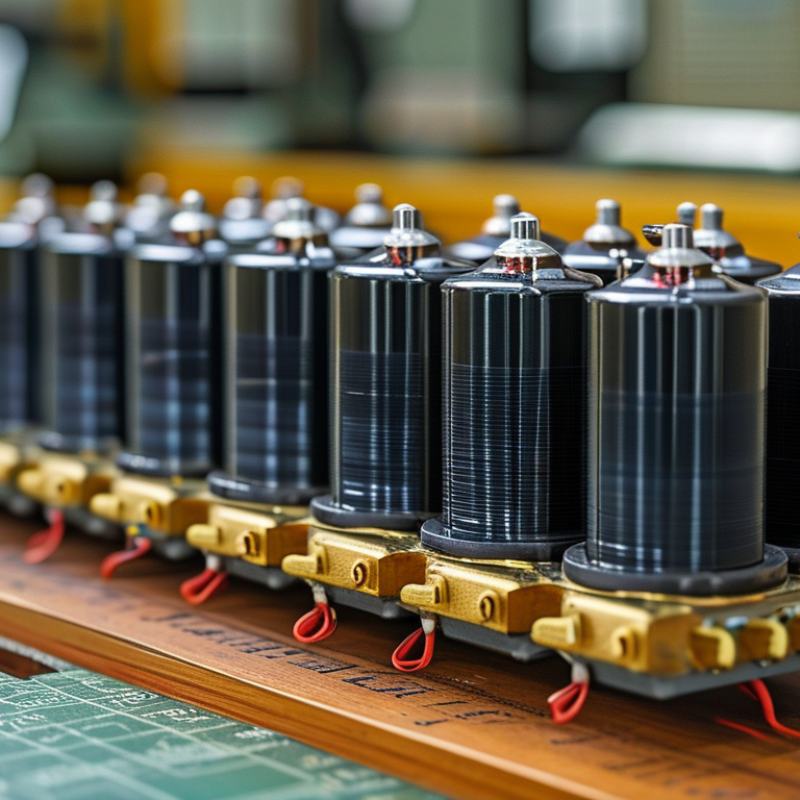
What Are the Best Power Inductors from China?

Defining Power Inductors and Their Role in Electronic Systems

Power inductors are passive components that store energy in a magnetic field.

In electronic systems, they control current, reduce ripple, and support stable voltage conversion. A typical power inductor contains a magnetic core and a copper winding. Its performance depends on inductance, saturation current, direct-current resistance, and heat tolerance.

In a switching power supply, the inductor receives rapidly changing current from a transistor. It then releases energy to the load with fewer abrupt fluctuations.

Low resistance helps reduce power loss. Adequate saturation current prevents the core from losing effectiveness during heavy loads. Size also matters. A compact inductor may fit a mobile device, while industrial equipment often needs stronger thermal performance.

When evaluating power inductors from China, I would inspect samples before trusting a specification sheet.

Bench testing at the intended switching frequency can reveal heating, audible noise, and unexpected inductance changes. Ask for winding materials, core details, tolerance data, and production traceability. Reliable suppliers should provide consistent test methods and quality records.

Factory process control, automated winding, and inspection equipment can improve repeatability, but they do not replace independent verification. A datasheet may look precise. Real circuit behavior is sometimes less tidy.

I have seen a component pass a basic resistance check yet overheat during continuous ripple testing. That is why thermal measurements, load cycling, and application-specific validation deserve careful attention.

Key Specifications for Evaluating Chinese Power Inductors

What Are the Best Power Inductors from China?

Key Specifications for Evaluating Chinese Power Inductors

Selecting a power inductor requires more than comparing catalog prices. In practical circuit reviews, inductance value is only the starting point. Check the tolerance across the operating temperature range. A small shift can affect ripple current and converter stability. Pay close attention to saturation current, especially in battery systems and switching power supplies. The rated value should match your real peak current, not only the average load.

DC resistance directly influences copper loss and heat. Lower resistance usually improves efficiency, but it may increase component size or cost. Review the thermal rating, self-heating data, and allowable operating temperature. Frequency performance also matters. Some inductors lose efficiency at higher switching frequencies. Shielded construction can reduce magnetic interference near sensors, communication lines, and audio circuits.

Reliable suppliers should provide clear test conditions, material information, production traceability, and recent inspection records. Ask whether samples came from normal production. They should. Independent testing can confirm inductance, resistance, current capacity, and temperature rise. A perfect datasheet is not enough. One weakness remains: published values may use different measurement methods. Compare conditions carefully. Evaluate vibration resistance, solderability, insulation strength, and long-term aging when the application demands them. Cost matters, but unstable specifications create greater expense during redesigns and field repairs.

Leading Types of Power Inductors Manufactured in China

What Are the Best Power Inductors from China?

Leading Types of Power Inductors Manufactured in China

China manufactures several practical power inductor types for automotive electronics, telecom equipment, industrial controls, and consumer devices. Wire-wound inductors remain common because their copper paths support high current and low resistance. Molded power inductors use magnetic powder around the winding, creating compact bodies with improved mechanical protection. Multilayer inductors suit smaller circuits, although their current capacity is usually lower. Ferrite drum-core and metal-composite designs also serve switching regulators and battery-management systems.

The market is moving toward smaller packages and higher current density. Grand View Research’s 2024 power inductor market analysis estimates global growth at roughly 6% annually through 2030. Public procurement data also shows strong demand from electric vehicles, charging systems, and 5G infrastructure. These figures vary by market definition. That matters.

In factory evaluation, I would check inductance tolerance, saturation current, DC resistance, thermal rise, and acoustic noise. A part may pass its electrical specification but still heat excessively inside a sealed enclosure. IEC 62024-2 provides recognized methods for measuring impedance and related inductor characteristics. Chinese manufacturers increasingly combine automated winding, laser marking, X-ray inspection, and temperature cycling. Quality is not uniform. Supplier audits, traceable test records, and samples from multiple production lots remain essential. I would not choose a component from its datasheet alone. Tiny details matter.

How to Assess Chinese Power Inductor Manufacturers

The best power inductor is not chosen by origin alone. It is selected through repeatable evidence, measured under real operating conditions. MarketsandMarkets estimates the global power inductor market will grow from about USD 3.1 billion in 2023 to USD 4.6 billion by 2028. That growth increases supplier choice, but also raises qualification risks.

Assess Chinese manufacturers through current saturation, rated current, DC resistance, temperature rise, and core-loss data. Request curves, not isolated values. Check whether testing follows IEC 62024 or equivalent laboratory procedures. A reliable supplier should provide lot traceability, incoming material records, and process-control documents. ISO 9001 supports quality management, but certification alone proves little. Visit the factory when possible. Inspect winding tension, powder handling, automated inspection, and aging controls.

Samples must survive your actual circuit. Test them at elevated temperature, switching frequency, and mechanical stress. Compare at least three production lots. A 2024 report from Grand View Research identifies automotive electronics and power conversion as major demand areas for power inductors. Those applications punish unstable inductance and rising resistance. Ask for failure analysis and corrective-action records. Good answers include measured evidence. Vague promises are not evidence. An uncomfortable point remains: a clean audit can miss hidden variation between shifts. One sample may look excellent. It may still fail after humidity exposure or thermal cycling. Supplier assessment should therefore include independent validation, not only factory documents.

Selecting the Best Chinese Power Inductor for Your Application

Selecting the best Chinese power inductor starts with the application, not the catalog. Define voltage, switching frequency, ripple current, and available board space. A compact converter may need a shielded molded inductor. A high-current motor stage may need a larger ferrite core. Small detail. Check inductance at the actual operating current, not only at zero current. Saturation can rise sharply near the rated limit.

Ask suppliers for test conditions, tolerance data, thermal curves, and production samples. A reliable datasheet should state DCR, saturation current, temperature rise, and measuring frequency. Do not compare current ratings blindly. Some suppliers define saturation at a 10% inductance drop; others use 30%. That difference changes the design margin. I once selected a part by its impressive current number and overlooked copper loss. The prototype ran, but the case became hotter than expected. That mistake still informs my screening process.

For Chinese sourcing, review factory quality controls, traceability, inspection records, and sample consistency. Request several lots when the design is sensitive. Measure impedance and temperature on your own board. Confirm packaging, lead times, moisture handling, and change-notification procedures before approval. Keep communication technical and documented. A video audit can help, but it cannot replace incoming inspection. Leave room for tolerance, aging, and imperfect measurements. Engineering judgment matters more than a low quotation.

Selecting the Best Chinese Power Inductor for Your Application

The chart shows representative continuous-current targets commonly used when selecting power inductors for different applications. Actual requirements depend on inductance, switching frequency, temperature rise, saturation current, DC resistance, core material, and operating temperature. Use these values as an engineering starting point and verify the final choice against the manufacturer’s datasheet.

Article Source: