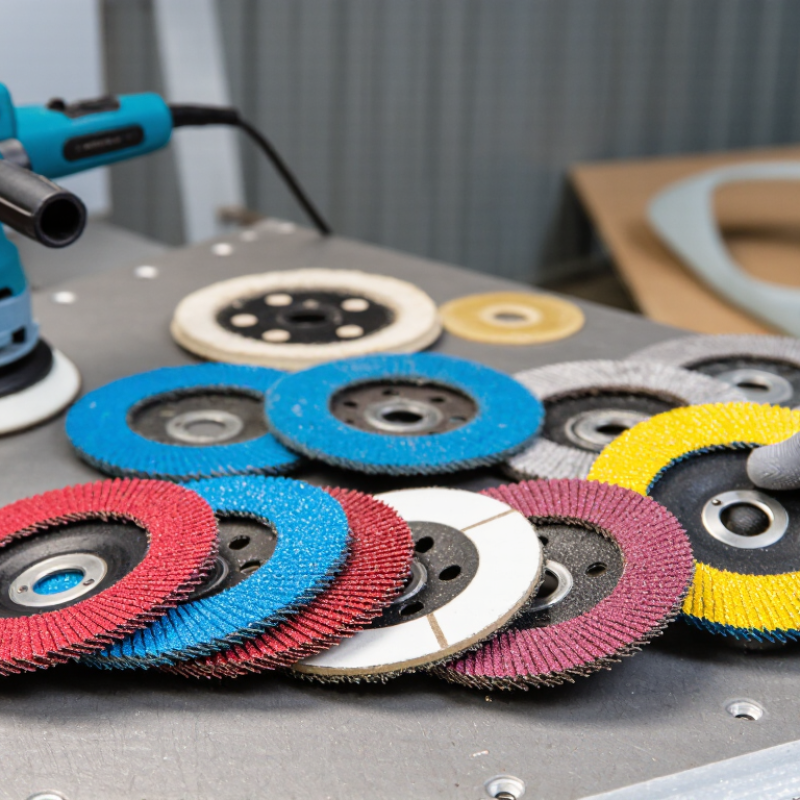
Choosing reliable Velcro Abrasive Disc manufacturers and suppliers requires more than comparing prices. Workshop results often depend on small details, including hook strength, disc balance, grit consistency, and backing durability. A disc that looks identical online may perform differently on painted steel, hardwood, or automotive filler.
This guide examines leading manufacturers and suppliers through practical purchasing criteria. It considers abrasive materials, available diameters, grit ranges, hole patterns, packaging quality, and production capacity. Supplier experience also matters. Clear technical data, responsive communication, sample availability, and stable delivery schedules can reveal how seriously a company supports professional users. Certifications and documented quality procedures offer useful evidence, although they should not replace hands-on testing.
Real-world performance remains decisive. A Velcro Abrasive Disc should attach securely, remove material evenly, and release cleanly from the backing pad. It should also resist premature edge wear during repeated passes. No supplier is perfect. Some offer excellent customization but require larger minimum orders. Others provide fast shipping but fewer abrasive options. That trade-off deserves attention.
The manufacturers and suppliers discussed here are assessed with an evidence-focused approach. Product specifications, manufacturing capabilities, application suitability, and customer support all influence the evaluation. Buyers should still verify current details directly, especially when ordering for demanding production environments. A carefully chosen supplier can reduce waste, protect operator time, and improve finishing consistency. Performance tells the fuller story.
Hook-and-loop abrasive discs combine a coated abrasive face with a reusable textile backing. The backing helps operators change discs quickly, especially during bodywork, woodworking, and metal finishing. In practice, the attachment must sit flat. A small wrinkle can create uneven scratches or premature edge wear.
Grit is normally identified by FEPA P-grades, aligned with ISO 6344 particle-size standards. Lower numbers, such as P40 or P60, remove material aggressively. Higher numbers, such as P180 or P320, produce finer finishing marks. The difference is visible on a test panel. It is also easy to overestimate grit consistency between suppliers. A 2024 Grand View Research analysis valued the global abrasives market at approximately USD 46.2 billion in 2023, with projected growth near 5.2% annually through 2030. That expansion increases product choice, but not necessarily quality.
Common disc diameters include 75, 125, 150, and 180 millimeters. In North American workshops, 3-, 5-, 6-, and 7-inch formats remain common. Match the disc to the backing pad, spindle, and dust-extraction holes. A poorly matched hole pattern can reduce airflow and raise surface temperature. I prefer checking adhesion after several peel cycles, not after one installation. That test takes seconds. It often reveals weak hooks, clogged loops, or an overly stiff backing before production begins.
Top Velcro Abrasive Disc Manufacturers and Suppliers
Top Velcro Abrasive Disc Manufacturers Ranked by ISO 9001 and Product Range
A useful ranking begins with documented quality, not attractive packaging. Manufacturers certified to ISO 9001 usually control purchasing, production, inspection, and corrective actions. However, certification alone does not prove superior sanding performance. That distinction matters.
The highest-ranked suppliers typically offer broad disc ranges, including 75 mm, 125 mm, and 150 mm sizes. They also provide multiple grits, from coarse P40 to fine P1000. Practical product details reveal more. Look for consistent hook density, firm backing, clean perforations, and stable disc adhesion. Test sheets should identify abrasive grain, backing material, batch number, and recommended applications. Some suppliers publish technical data. Others provide little beyond a certificate.
A strong second tier may hold ISO 9001 certification but offer fewer sizes or limited grit options. This can suit workshops with simple sanding needs. Yet narrow ranges may create purchasing delays when a project changes. Ask about sample testing, replacement policies, and delivery records. Request evidence of abrasion consistency, not just marketing claims.
No ranking is flawless. A factory may have excellent procedures but uneven product feedback. Another supplier may perform well while its documentation remains weak. I would score quality systems at 40 percent and product range at 35 percent. Field testing, technical support, and delivery reliability should fill the remaining 25 percent. That method is imperfect, but it is more useful than judging price alone.
Choosing a Velcro abrasive disc supplier requires more than checking a grit range. A reliable data sheet should identify the abrasive standard, backing type, disc diameter, hole pattern, and maximum RPM. P16-P80 discs remove paint, scale, and weld marks quickly. P120-P400 suits shaping and surface preparation. P600-P1200 refines scratches, while P2000-P5000 supports fine finishing and polishing. P5000 is not equally available in every backing material. Ask for sample discs before placing a large order. A 125 mm disc often feels balanced on curved panels. A 150 mm disc covers flat surfaces faster. Smaller 75 mm discs reach edges better. They can also heat up sooner.
Maximum RPM is a safety and performance figure, not a marketing decoration. Compare the supplier’s rating with the tool’s actual no-load speed. Never select a disc by diameter alone. A supplier may rate a 75 mm disc near 20,000 RPM. A 125 mm disc may be rated near 12,000 RPM. A 180 mm disc may reach only 8,000 RPM. These figures vary with backing stiffness, holes, adhesive quality, and testing methods. Confirm whether the rating applies to dry use, wet use, or a specific backing pad. I have seen coarse discs cut well but shed abrasive when stored in damp conditions. That result deserves investigation, not excuses. Request lot traceability, inspection records, and clear replacement terms. Also check whether the hook-and-loop bond remains secure after repeated pad changes.
Choosing Velcro Abrasive Discs: Aluminum Oxide, Silicon Carbide, or Ceramic?
Hook-and-loop discs make grit changes fast in busy workshops. The abrasive material still determines cutting speed, finish, and disc life. Aluminum oxide remains the practical general-purpose option. It works well on wood, painted surfaces, and ordinary steel. Silicon carbide has sharper, harder grains. It suits glass, stone, plastics, and clear-coat finishing. However, its grains fracture quickly under heavy pressure. Ceramic abrasives cut aggressively and resist heat during demanding metalwork. They often cost more, but can remove weld discoloration faster. Grand View Research valued the global abrasives market at approximately USD 47 billion in 2023, with continued growth expected through 2030. That scale reflects broad industrial demand, not automatic superiority for every disc.
In shop testing, pressure often changes results more than grit selection. Excessive pressure overheats the workpiece and shortens disc life. Use aluminum oxide for routine sanding and lower material costs. Choose silicon carbide for a cooler, finer surface. Select ceramic when consistent cutting matters on stainless steel or hardened alloys. FEPA safety guidance stresses correct backing, speed limits, and dust control. A disc may look sound but still be unsuitable for the tool’s rated speed. I once judged ceramic as universally better. That was too simple. Its higher price may not repay itself on soft timber.
Tips: Match the abrasive to the workpiece first. Start with moderate pressure. Keep the disc flat. Compare removal rate, surface temperature, and finish after five minutes. Record the result; memory is unreliable.
Silicon carbide is typically the hardest and sharpest-cutting option, while aluminum oxide offers balanced durability and cost efficiency. Ceramic alumina generally provides high hardness and improved grain longevity through controlled fracturing. Values shown are representative midpoints of commonly reported ranges; actual performance varies by grain formulation, backing, coating, and application.
For hook-and-loop abrasive discs, supplier selection should begin with measurable operating data, not polished catalogs. MOQ affects cash, storage, and trial flexibility. Ask whether the quoted MOQ applies per grit, backing size, or shipment. A 500-disc MOQ may suit standard 125 mm discs, but it may burden specialty-grit trials. Request three comparable quotes and record response times. The lowest unit price can hide tooling, changeover fees, or mixed-carton limits.
Lead time needs two numbers: production time and transit time. Request normal and peak-season figures. A seven-day promise may exclude coating, inspection, or export clearance. Track on-time delivery for at least three purchase cycles. This is imperfect evidence, but better than a promise. McKinsey’s 2020 supply-chain survey reported that 73% of leaders encountered supply-chain problems. That finding supports dual sourcing, regional inventory, and clear escalation contacts.
Certifications require careful verification. ISO’s 2022 Survey of Certifications recorded more than 1.2 million ISO 9001 certificates worldwide. Yet certification alone proves limited product performance. Request current certificates, audit dates, abrasive-grain specifications, and test records. Check bond strength, disc balance, and dust resistance. For international shipments, review REACH and RoHS declarations where applicable. Global coverage means more than a sales office. Confirm local stock, customs support, warranty handling, and technical service in each target region. One overlooked detail: replacement stock.
| Anonymous Supplier Profile | Typical Product Scope | MOQ for Standard Discs | Typical Lead Time | Sample Policy | Certifications and Compliance Documents | Quality-Control Evidence to Request | Global Coverage Indicator | Customization Capability | Buyer Evaluation |
|---|---|---|---|---|---|---|---|---|---|
| Profile 01 High-volume manufacturer | Hook-and-loop discs in 75–180 mm diameters; aluminum oxide, silicon carbide, and ceramic abrasive options; paper, film, and cloth backings. | 1,000–5,000 pieces per grit and size; lower quantities may apply to mixed cartons. | 15–30 calendar days for repeat standard orders; 30–45 days for new production specifications. | Usually available; sample preparation commonly takes 3–7 working days. Freight is normally paid by the buyer. | ISO 9001:2015 certificate; REACH and RoHS declarations where applicable; product technical data sheet; safety data sheet when requested. | Incoming backing inspection, abrasive-grain verification, adhesion testing, dimensional checks, and batch traceability. | Regular export activity across Europe, North America, Southeast Asia, and the Middle East. | Private label packaging, custom hole patterns, custom backing, grit combinations, and carton labeling. | Strong option for recurring orders and stable monthly demand. |
| Profile 02 Flexible mid-volume supplier | General-purpose hook discs for automotive refinishing, woodworking, metal preparation, and surface finishing; common sizes from 75–150 mm. | 500–2,000 pieces per specification; mixed grit orders may require a higher total quantity. | 20–35 calendar days for standard products; 35–50 days for customized items. | One mixed sample set is commonly possible before bulk production, subject to availability. | ISO 9001:2015 or equivalent quality-system documentation; REACH declaration; RoHS statement for applicable products; country-of-origin documents. | Lot inspection reports, hook attachment checks, backing flatness, abrasive coating uniformity, and packaging inspection. | Can generally support export orders to Asia, Europe, North America, Australia, and selected African markets. | Moderate customization for label design, hole configuration, disc diameter, grit range, and packaging quantity. | Good balance between MOQ flexibility, product range, and cost. |
| Profile 03 Low-MOQ specialist | Small and medium hook-and-loop discs for repair shops, detailing, DIY, and light industrial applications; mainly aluminum oxide and silicon carbide. | 100–500 pieces per grit and size for stocked items; custom products may require 500–1,000 pieces. | 7–20 calendar days for stocked products; 25–40 days for custom production. | Small trial quantities are generally available; sample dispatch can often be arranged within 2–5 working days. | Basic product specification sheet; available REACH or RoHS declarations should be checked by product and destination. | Sample-to-bulk consistency, grit confirmation, hook-and-loop engagement, disc runout, and package count verification. | Usually strongest in domestic and regional markets; international shipping is available but may rely on third-party logistics. | Limited to standard sizes, standard grits, simple labels, and small packaging adjustments. | Suitable for market testing, smaller distributors, and replacement-product programs. |
| Profile 04 Premium performance supplier | Ceramic and zirconia abrasive discs for high-stock-removal applications; reinforced cloth or film backing; engineered hole patterns. | 500–2,500 pieces per specification, depending on abrasive grain and backing construction. | 25–45 calendar days for standard premium products; 45–70 days for new formulations or tooling. | Technical samples are normally provided after application review; performance testing may require several sample grades. | ISO 9001:2015; optional ISO 14001:2015; REACH and RoHS declarations; technical data sheets; batch or conformity certificates when available. | Cutting-rate testing, wear-life testing, grain distribution checks, bond-strength testing, and application-specific performance records. | Typically supports industrial customers in Europe, North America, East Asia, and other export markets through distributors. | High customization for abrasive grain, backing, hole pattern, disc structure, packaging, and application-specific specifications. | Best fit where removal rate, service life, and process consistency are more important than lowest unit price. |
| Profile 05 Distributor with private-label access | Multi-source range of hook discs covering common diameters, grits, perforations, and backing types; suitable for mixed-product purchasing. | 100–1,000 pieces per SKU; mixed-SKU orders may be accepted with a minimum total order value. | 5–15 working days from stock; 30–60 days for factory-direct private-label replenishment. | Stock samples can usually be shipped quickly; factory samples depend on the selected manufacturing source. | Supplier-issued declarations, product data sheets, packaging information, and certificates from the original manufacturer should be requested. | Incoming inspection records, supplier approval process, batch identification, packaging checks, and complaint-handling procedure. | Strong logistics reach through warehouses, freight forwarders, and regional distribution networks. | Private labeling and mixed cartons are often available; technical product changes may be limited. | Convenient for fast delivery and mixed orders, but source-factory transparency should be verified. |
| Profile 06 Regional export manufacturer | Standard hook discs for woodworking, automotive repair, and general metal finishing; common aluminum oxide and zirconia ranges. | 500–3,000 pieces per grit and size; export packaging may have separate minimums. | 20–40 calendar days, excluding sea or air transportation time. | Samples are available for standard ranges; customized samples may require a tooling or setup charge. | ISO 9001:2015 where certified; REACH and RoHS documentation should be requested for each relevant SKU; export documents available by destination. | Coating-weight checks, adhesive-bond inspection, disc diameter and hole-position measurement, carton drop testing, and final sampling inspection. | Reliable within nearby regions and established trade lanes; coverage in distant markets may depend on the buyer’s freight arrangement. | Standard private-label printing, carton quantity changes, selected hole patterns, and approved grit ranges. | A practical choice when regional freight cost and responsive communication are priorities. |
| Profile 07 Sustainable-material supplier | Hook discs using recycled or lower-impact backing options where available; aluminum oxide and silicon carbide products for general finishing. | 1,000–3,000 pieces per size and grit; sustainable backing options may carry higher minimums. | 25–50 calendar days for standard items; 40–70 days when special backing or packaging is required. | Material samples and packaging samples are generally available before a purchase order. | ISO 9001:2015; optional ISO 14001:2015; REACH and RoHS declarations; recycled-content or chain-of-custody claims require independent verification. | Backing-material records, recycled-content evidence, coating consistency, adhesion testing, batch traceability, and packaging-material verification. | Suitable for buyers serving markets with environmental procurement requirements, subject to destination-specific documentation. | Custom recycled-content targets, paper packaging, reduced-plastic packaging, private labeling, and product-size adjustments. | Best for procurement programs that include documented environmental criteria. |
| Profile 08 Contract and OEM supplier | Engineered hook discs developed for power-tool systems, automotive production, marine finishing, and other controlled processes. | 2,000–10,000 pieces per production specification; OEM programs may require annual volume commitments. | 30–60 calendar days for approved products; 60–90 days for new tooling, validation, or process qualification. | Pre-production samples, pilot lots, and approval samples are normally required before mass production. | ISO 9001:2015; possible ISO 14001:2015; customer-specific quality documents; REACH and RoHS declarations; inspection and conformity records. | Control plans, first-article inspection, process capability data, lot traceability, corrective-action records, and change-control procedure. | Generally capable of multi-region supply when forecast, packaging, and logistics requirements are formally established. | Very high customization for product construction, performance targets, tooling, packaging, labeling, and delivery schedules. | Recommended for long-term OEM supply, provided qualification and forecast requirements can be met. |