In 2026, choosing a Pilot Valve starts with a practical question: what must it control, and under what conditions? These compact components use a small control signal to guide a larger flow of air, water, or hydraulic fluid. Common types include direct-acting and solenoid pilot valves, pneumatic pilot valves, and pilot-operated pressure or check valves. Each design behaves differently when pressure changes, a signal fails, or a system starts and stops repeatedly.
A solenoid model may suit automated equipment that needs a clear electrical command. Pneumatic designs can fit systems already supplied with compressed air, while pilot-operated valves can manage higher flow or pressure with a smaller control input. Proportional models offer finer adjustment than simple open-or-closed switching. The labels can overlap, though; “pilot-operated” describes how a valve works, not always a separate product family. Easy to overlook. Before comparing models, check operating pressure, flow capacity, connection size, control voltage, fluid compatibility, and temperature range. A mismatch may cause slow response, leakage, or unstable operation. Manufacturer data sheets and installation guidance are more reliable than a type name alone. Even careful selection has limits: real piping, contamination, and maintenance conditions can change performance. This guide compares the leading pilot valve types and explains where each may fit, so buyers can weigh practical trade-offs rather than chase a universal winner.
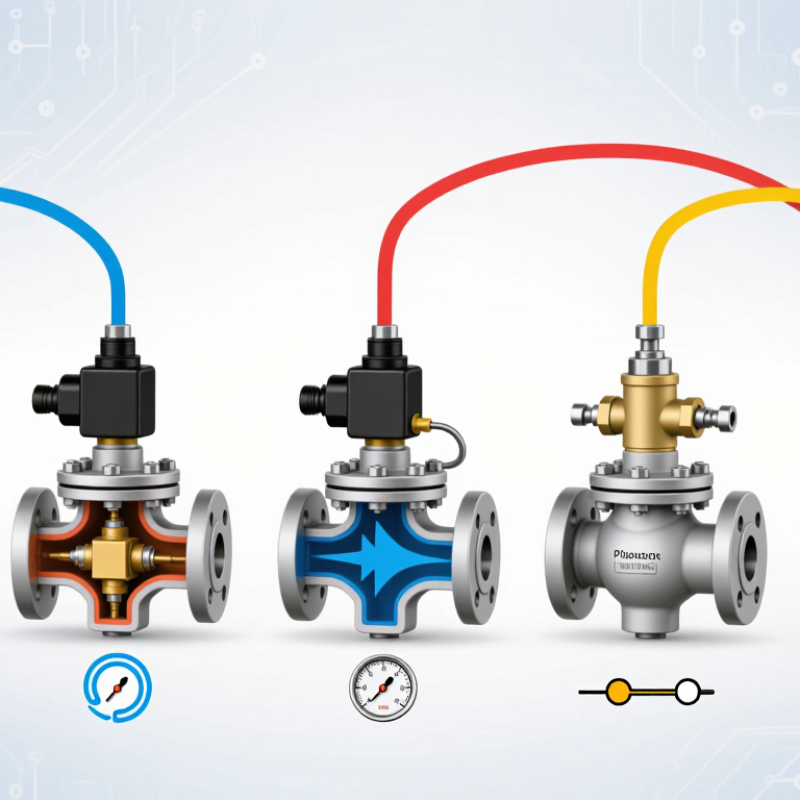
A pilot valve uses a small control signal to operate a larger valve. Instead of moving a heavy spool or opening a high-flow passage directly, it directs pressure to a main valve’s control chamber. This lets a modest electrical or hydraulic input manage substantial flow. Small signal, larger action.
Common designs include pilot-operated pressure relief valves, pressure-reducing valves, and directional valves. A relief pilot senses rising pressure and helps open the main valve before system pressure exceeds its set point. A pressure-reducing pilot regulates downstream pressure, while a directional pilot routes fluid to different actuators. Solenoid pilots use an electrical signal; proportional versions can adjust output more gradually.
Selection depends on fluid, pressure range, flow demand, response time, and contamination risk. In a hydraulic circuit, for example, fine debris can obstruct a small pilot passage even when the main line appears clear. Filtration and routine inspection matter. So does matching the pilot’s settings to the main valve. A mismatch may cause chatter, slow response, or unstable pressure. In practice, the clean schematic can be misleading; real systems have temperature changes, worn seals, and pressure spikes that deserve testing under operating conditions.
What Are the Top Pilot Valve Types in 2026? Key Features Used to Classify Pilot Valves
Pilot valves are classified by how they operate and what they control. Direct-acting designs move the main element themselves. Pilot-operated designs use a smaller control signal to manage a larger flow. They may need a minimum pressure difference to work reliably. Check whether the pilot supply is internal or external; this detail can change performance in low-pressure systems.
Port count and valve positions describe flow paths, while actuation identifies the control method. Common options include electrical, pneumatic, hydraulic, and manual actuation. Material compatibility matters too. A seal that performs well with clean air may not suit a particular liquid. Compare operating pressure, flow capacity, response time, and connection size against the actual system. In practice, catalog categories can seem tidier than field conditions. Small details matter.
Tips: Read the pressure range and flow rating together. Confirm the medium, temperature, and port arrangement before selecting a type. If the system’s operating conditions vary, allow for that uncertainty rather than choosing from the label alone.
Leading pilot valve types in 2026 include direct-acting solenoid, pilot-operated solenoid, pneumatic pilot, and proportional designs. Direct-acting valves suit low-pressure circuits and fast switching. Pilot-operated models handle larger flow, but usually need a minimum pressure differential. Pneumatic pilots can keep electrical components away from hot or wet locations. Proportional valves adjust pressure more gradually than simple on-off designs. Response matters. So does the failure position.
Selection starts with operating pressure, required flow, cycle frequency, fluid cleanliness, and available control signals. The U.S. Department of Energy’s Improving Compressed Air System Performance sourcebook reports that leaks can waste 20–30% of compressor output in poorly maintained systems. That figure is not a valve-specific failure rate, but it shows why leakage checks and efficient air use belong in valve selection. A valve that looks right on a diagram may perform poorly with dirty air or an undersized pilot supply. This is easy to overlook. Compare manufacturer-neutral performance data under the actual operating conditions, and verify response and leakage during commissioning. One caveat: proportional control adds setup complexity, and not every process needs that precision.
What Are the Top Pilot Valve Types in 2026?
How Major Pilot Valve Types Differ in Performance
Pilot valves differ mainly in how they respond to a control signal and how much flow they can manage. Direct-acting designs move the main valve element themselves. They respond quickly and work well at low flow, but larger valves may need more force. Simple, but limited. A pressure change or small blockage can also affect performance.
Pilot-operated valves use a smaller control valve to shift a larger main stage. This lets them handle higher flow with a modest control signal. They are common in hydraulic and pneumatic systems where capacity matters. However, they often need enough inlet pressure to operate reliably. At startup, that requirement can be easy to overlook.
Proportional pilot valves vary output in response to changing electrical signals, allowing smoother control than basic on-off designs. They suit applications where pressure or flow must change gradually, though setup and calibration take care. A slow response is not always a fault; it may help prevent sudden movement. In real installations, fluid cleanliness, temperature, and load can change the result, so published response figures should be checked against operating conditions. The neat categories help, but actual systems are messier.
| Pilot Valve Type | Typical Medium | How It Works | Performance Characteristics | Key Advantages | Main Limitations | Common Applications |
|---|---|---|---|---|---|---|
| Solenoid Pilot Valve | Air, water, oil, or other compatible fluids, depending on construction | An electrical coil shifts a small pilot element, which directs pressure to operate a larger valve. | Fast electrical switching is possible; response depends on coil, pressure, valve size, and fluid. Requires a suitable electrical supply. | Easy to automate; compact control interface; available in normally open and normally closed configurations. | Coil power and heat must be managed. Minimum operating pressure may be required for some pilot-operated designs. | Automated process equipment, pneumatic circuits, fluid handling, and remote on/off control. |
| Pneumatic Pilot Valve | Compressed air or another specified gas | A pneumatic signal shifts a pilot stage, which routes air to actuate a larger directional or process valve. | Can provide rapid cycling; switching behavior depends on signal pressure, tubing length, exhaust capacity, and actuator load. | Suitable for hazardous areas when designed without electrical switching at the valve; integrates readily with air-operated machinery. | Needs a clean, adequately dry air supply. Long or restrictive signal lines can slow response. | Machine automation, pneumatic actuators, and remote operation of process valves. |
| Hydraulic Pilot Valve | Hydraulic oil or another specified hydraulic fluid | A low-flow pilot signal controls a larger hydraulic stage, directing or regulating high-pressure flow. | Can control substantial flow and pressure with a relatively small pilot signal; performance depends on fluid condition, pressure, and spool design. | Enables high-force control and supports complex hydraulic functions. | Fluid cleanliness and viscosity affect operation. Leakage, heat, and maintenance requirements need consideration. | Mobile equipment, presses, lifting systems, and industrial hydraulic power units. |
| Pilot-Operated Directional Control Valve | Usually hydraulic oil or compressed air, depending on design | A pilot stage moves the main spool or poppet to select the direction of flow. | Handles greater flow than a small direct-operated control element; switching time varies with pilot pressure, load, and valve size. | Allows remote control of larger flow paths and can reduce the force required at the control stage. | Often requires a minimum pilot pressure and correct porting. Contamination or unsuitable fluid can impair movement. | Hydraulic circuit control, pneumatic machinery, and multi-actuator systems. |
| Pilot-Operated Pressure Relief Valve | Hydraulic oil and other compatible liquids; some designs are made for gas service | A pilot section senses pressure and controls the main relief element to limit system pressure. | Typically offers more stable pressure control at higher flows than a simple direct-acting relief valve; response and stability depend on sizing and system dynamics. | Useful for high-flow pressure protection and can provide adjustable pressure settings. | May require a minimum pressure differential. Pilot passages can be sensitive to contamination, and unsuitable tuning can cause instability. | Hydraulic power systems, injection equipment, and industrial pressure circuits. |
| Pilot-Operated Check Valve | Most commonly hydraulic oil | Allows flow in one direction and blocks reverse flow until pilot pressure opens the check element. | Provides load holding when correctly selected; opening behavior depends on pilot ratio, load pressure, and circuit arrangement. | Helps prevent unintended actuator movement and can release a held load when commanded. | Incorrect pilot pressure or circuit design can cause difficult release, pressure intensification, or unwanted movement. | Hydraulic cylinders, clamping circuits, and load-holding applications. |
| Electro-Pneumatic Proportional Pilot Valve | Compressed air | An electrical command modulates pilot pressure rather than switching only between fully open and fully closed states. | Enables adjustable pressure or flow control; accuracy and response depend on feedback, supply quality, and operating range. | Supports repeatable setpoint control and integration with electronic control systems. | Generally more complex and costly than simple on/off pilots; requires stable air and appropriate electrical control. | Pressure regulation, tension control, test equipment, and automated process control. |
Choosing a pilot valve starts with the pressure available at its inlet. Direct-acting types can shift at low pressure, but larger ports may require more force and power. Pilot-operated valves use line pressure to move the main element, making them suitable for higher flow. They may fail to shift when pressure drops below their minimum operating threshold. Check the manufacturer’s pressure range against startup, shutdown, and peak demand—not just steady-state readings. Real systems are messier.
For pneumatic systems, air quality and leakage also matter. The U.S. Department of Energy’s Improving Compressed Air System Performance: A Sourcebook for Industry reports that leaks can waste 20–30% of compressor output in poorly maintained systems. That figure is not a forecast for every plant, but it highlights why a small pilot passage can be vulnerable to pressure loss. For long tubing runs, consider an externally piloted valve; for local, stable supply, internal piloting may be simpler. Wet or contaminated air calls for suitable filtration and routine checks. For hydraulic service, match seals and body materials to the fluid and temperature, then verify contamination limits against the equipment specification. No type wins everywhere. A bench test at real operating pressure can expose surprises before installation.
Qualitative suitability by operating condition (1 = lower fit, 5 = higher fit). Use this comparison as a selection guide; actual performance depends on valve design and the manufacturer's specifications.
Direct-acting solenoid valves can operate without a minimum pressure differential, while pilot-operated valves are commonly selected for larger flow capacity. Pneumatic and hydraulic pilots are useful when the control system uses compressed air or hydraulic power.