
China’s leading suppliers of Battery Powered Pruning Saw equipment serve orchard owners, landscapers, and home gardeners seeking cleaner, more controlled cuts. A compact saw can reach dense branches without the fumes or pull-start routine of a gas model. Yet supplier quality matters as much as the tool itself. Battery compatibility, chain tensioning, replacement parts, and clear safety guidance all shape the experience after purchase.
A useful editorial principle for comparing suppliers is: “A pruning saw earns trust through balanced cutting performance, dependable support, and parts that remain easy to obtain.” This line is an original summary, not a verified quotation from a named industry expert. For publication, replace it with a sourced comment from a qualified specialist. That distinction matters. Credible buying advice should show where its claims come from.
This guide examines supplier range, battery platforms, cutting capacity, warranty terms, and customer support. Look for practical details: stated bar length, compatible battery models, spare-chain availability, and service response times. Do not rely on a polished product photo alone. A saw that feels light in a catalog may tire the wrist during repeated overhead cuts. Supplier claims also deserve scrutiny; specifications can vary by model and market. The comparison is not perfect, and buyers should confirm current terms directly. Still, careful checks make it easier to identify a Battery Powered Pruning Saw supplier suited to real work, not just a persuasive listing.
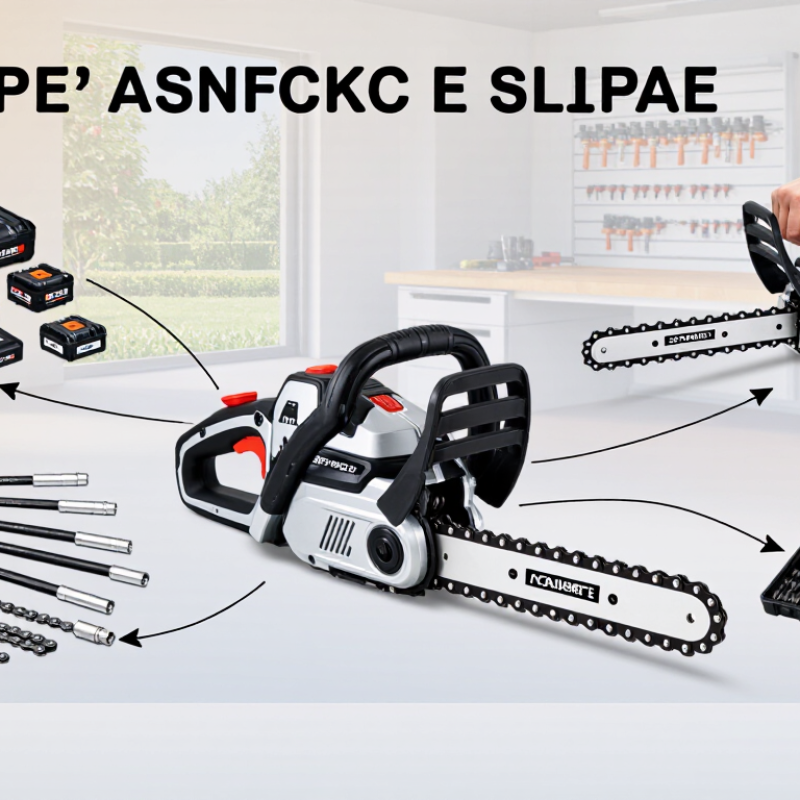
Battery-powered pruning saws are compact cutting tools designed for branches that are too thick for hand pruners. A small motor drives a short chain around a guide bar, powered by a rechargeable battery. Their light weight can reduce fatigue during routine garden work, though the saw still needs firm, controlled handling.
Small, but capable.
People use them to remove dead limbs, thin crowded shrubs, and cut fallen branches into manageable pieces. Choose a branch within the saw’s stated cutting capacity, and support it so it cannot pinch the chain as the cut closes. Keep both hands on the tool if its design allows, wear eye and hand protection, and stay clear of the moving chain. Stop the saw before clearing debris or checking the chain. A battery-powered tool is quieter than many fuel-powered alternatives, but it is not silent; nearby people may still need warning.
Tips: Check the chain tension and battery charge before starting. Cut from a stable position, not from a ladder or while reaching overhead. Let the chain do the work; forcing it can cause binding. Afterward, clean sap and wood chips from the guide bar. I still find that a brief pause between cuts helps me notice awkward angles before they become mistakes.
China Top Battery Powered Pruning Saw Suppliers
How China’s Battery-Powered Pruning Saw Industry Is Organized
China’s battery-powered pruning saw industry is built around several connected supplier groups. Component makers produce motors, battery packs, switches, chains, and guide bars. Tool factories assemble these parts, then check cutting performance, battery fit, and basic safety functions. Some suppliers handle design and assembly in-house; others rely on outside partners. The structure is practical, but not always tidy.
Exporters and trading companies often connect factories with overseas buyers. They may coordinate samples, packaging, shipping, and product documentation. A buyer can ask who makes the motor, where batteries are sourced, and which checks happen before dispatch. Clear answers matter. A polished catalog alone tells little about factory capability. One detail is easy to miss: spare chains and battery replacements can affect long-term service as much as the saw itself.
Tips: Request a sample and test it on branches of different thicknesses. Check chain adjustment, grip comfort, and cutting consistency. Ask for written inspection details and replacement-part availability. If answers are vague, pause. Supplier roles can overlap, so verify who handles assembly and after-sales support.
The supply chain typically spans battery cells and packs, battery-management systems, motors and controllers, saw assembly, and distribution or after-sales service. The chart shows representative nominal battery platform voltages—not supplier counts or market shares. Some products use higher “maximum voltage” labels for the same platforms.
China’s leading battery-powered pruning saw suppliers generally fall into three types: dedicated tool manufacturers, OEM/ODM factories, and export-focused sourcing companies. Dedicated manufacturers often control motor assembly, blade fitting, and final inspection in one facility. Ask whether they test cutting performance on fresh branches, not only unloaded motor speed. A clean sample cut tells you more.
OEM/ODM factories can adjust battery capacity, handle shape, blade length, and packaging for a buyer’s market. Their strength is product adaptation, though customization may increase minimum order quantities and lead times. Request a written specification covering voltage, blade material, runtime conditions, charger input, and spare-part availability. Small details matter.
Export-focused suppliers may coordinate several factories and handle documentation, packing, and shipment schedules. They can suit buyers comparing multiple models, but production control may be less direct. Verify who performs incoming battery checks and final inspection. Ask for dated inspection records, clear warranty terms, and a sample from the intended production line. Test it under load. Some suppliers will not share every factory detail. That is worth noting, not ignoring.
China Top Battery Powered Pruning Saw Suppliers
How to Evaluate Chinese Suppliers by Quality and Product Range
A useful supplier review starts with the saw itself, not a polished catalogue. Ask for clear specifications covering bar length, cutting capacity, chain speed, battery voltage, and tool weight. Compare these details with the branches your customers actually prune. Paper is not proof. Request a sample and inspect the chain tensioner, hand guard, trigger response, and battery fit. A loose cover or awkward grip can matter more than an impressive feature list.
Quality evidence should be specific and repeatable. Ask how incoming batteries, motors, and finished saws are checked, and whether the supplier can share recent inspection records. For a sample test, make repeated cuts through similar wood and note runtime, heat, vibration, and chain adjustment. One good sample may not represent every production batch. I would want that concern addressed in writing, though it is easy to overlook.
Then examine the product range for practical coverage: compact saws for light pruning, higher-capacity models, compatible batteries, chargers, chains, and replacement parts. Fit matters more. A broad range is useful only if parts stay available and specifications remain consistent. Ask about minimum order quantities, packaging, lead times, and how defects are handled. Responses may sound less polished than a catalogue. Small details count. Clear answers and verifiable records are stronger signals than promises alone.
| Evaluation Dimension | What to Check | Evidence to Request | Suggested Weight |
|---|---|---|---|
| Product range | Compare available pruning-saw configurations, including compact and longer-bar models, different handle designs, and tool-only or battery-and-charger bundles. Bar lengths and package contents vary by model. | Current catalog, model-by-model specification sheets, package lists, and photographs of production samples. | 15% |
| Cutting performance | Review bar length, chain pitch and gauge, chain speed, and the maximum cutting capacity stated for each model. Compare performance only under the same test conditions and with equivalent materials. | Technical data sheets and repeatable test results that identify the wood type, branch diameter, battery condition, and test method. | 12% |
| Battery and charger system | Check battery voltage and capacity, charger input and output ratings, charging time, protection features, and whether batteries are compatible across the supplier’s models. | Battery and charger labels, compatibility matrix, user manuals, and applicable battery safety documentation. For lithium batteries shipped internationally, request the relevant UN 38.3 test summary. | 12% |
| Safety features | Assess chain brake or other specified stopping features, trigger lockout, hand protection, kickback warnings, chain-cover design, and clear operating instructions. Verify features on the actual model. | Sample inspection, user manual, safety-feature list, and test reports or certifications applicable to the intended sales market and product. | 12% |
| Build quality and materials | Inspect housing fit, switch operation, handle grip, bar alignment, chain tensioning, fasteners, and resistance to visible damage during normal handling. Confirm material claims against the product specification. | Pre-production or production sample, bill of materials for key components, inspection checklist, and incoming-material controls. | 12% |
| Durability and reliability | Ask how the supplier tests motor operation, chain and bar wear, repeated starts, and performance under the stated operating conditions. Check whether test results are model-specific. | Documented test procedures, sample sizes, pass criteria, test records, and corrective-action examples with confidential details removed if needed. | 10% |
| Quality management and traceability | Check whether production inspections are recorded and whether finished goods can be traced by model, batch, or production date. Review how defects and customer complaints are investigated. | Quality-management certificate, where applicable, inspection records, sample batch labels, and a description of the corrective-action process. | 10% |
| Compliance and labeling | Confirm that the product, battery, charger, packaging, and manuals meet the requirements for the destination market. Check that ratings and warnings match the supplied configuration. | Applicable declarations, certificates, or test reports; product and battery labels; packaging artwork; and language-specific manuals. Verify document scope and model numbers. | 8% |
| Spare parts and after-sales support | Ask about availability of chains, guide bars, batteries, chargers, and other replaceable parts, plus the process for warranty claims and technical support. | Spare-parts list, parts identification guide, warranty terms, service response process, and written availability information. | 5% |
| Commercial and sampling readiness | Compare sample lead time, production lead time, minimum order quantity, packaging options, and the supplier’s ability to keep specifications consistent between sample and bulk production. | Written quotation, sample order, approved specification sheet, packaging drawings, and a pre-shipment inspection plan. | 4% |
Start with the supplier’s registered company name, factory address, and actual role: manufacturer or trading company. Ask for a live production-floor video, then compare it with the address on business documents. Request recent inspection records and traceable sample units. Small details matter. A clean sample proves little if batch controls are unclear.
Check each pruning saw against a written specification: bar length, chain speed, battery capacity, weight, and runtime. Ask the supplier to test cuts on the same wood diameter and record results. Review relevant safety test reports and confirm they match the exact model and battery configuration. The IEA’s Global Critical Minerals Outlook 2024 reported that lithium demand rose about 30% in 2023. That makes battery sourcing and replacement availability worth checking, not assuming.
BloombergNEF reported an average lithium-ion pack price of $139 per kilowatt-hour in 2023, down 14% from 2022. This is market context, not a reliable quote for a pruning-saw battery. Compare several written quotations, including battery cells, chargers, spare chains, packaging, and warranty terms. Request a pre-shipment inspection with agreed pass criteria. I would still hesitate if a supplier avoids factory evidence or gives vague runtime claims. A small trial order can reveal issues, but it cannot replace ongoing quality checks.
