
Choosing among the top 304 Stainless Steel Plate manufacturers worldwide requires more than comparing prices or production volume. Buyers must examine chemistry, thickness tolerance, surface finish, heat treatment, and delivery reliability. A polished plate may look identical to another, yet its mill test certificate can reveal important differences in nickel content, tensile strength, or corrosion resistance.
This guide evaluates established manufacturers through practical industry criteria, including production capacity, quality systems, export experience, and material traceability. It considers plates used in food-processing equipment, chemical tanks, architectural structures, and marine environments. Reliable suppliers should provide clear inspection records, consistent dimensions, and documentation aligned with relevant ASTM, EN, or JIS requirements. Factory audits, sample testing, and direct technical communication can also expose problems before a large order is placed.
No ranking stays perfect.
Market conditions change. Capacity, lead times, and regional availability may shift without warning. Some manufacturers serve global markets directly, while others rely on distributors with different service standards. That distinction deserves attention. The strongest supplier on paper may not be the best fit for a project requiring narrow tolerances or urgent delivery. Buyers should verify current certifications, production capability, packaging methods, and after-sales support before signing a contract. This overview offers a practical starting point, not a substitute for independent testing or engineering judgment. Mistakes remain possible, especially when supplier information is outdated or translated poorly. Careful verification makes the final choice safer, clearer, and more defensible.
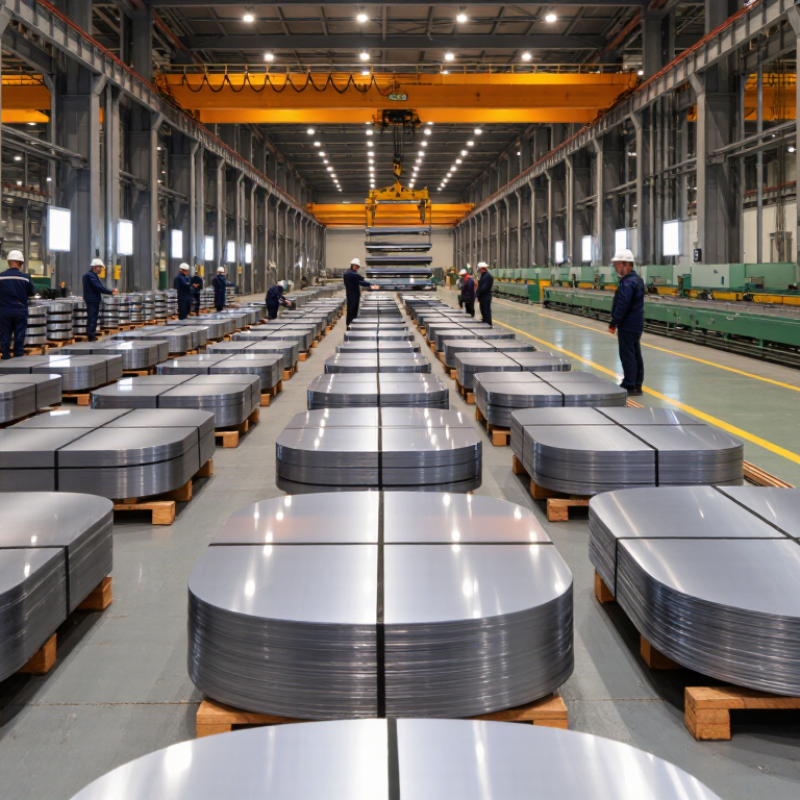
A leading 304 stainless steel plate manufacturer proves capability through repeatable quality, not polished claims. Experienced teams understand how chromium and nickel balance affects corrosion resistance, forming, and weld performance. They control melting, rolling, annealing, and pickling with documented procedures. Small details matter. Plate chemistry should match the agreed standard, while thickness and flatness remain within stated tolerances. Surface inspection under bright, even light can reveal pits, roll marks, or uneven scale.
Reliable producers provide heat numbers that follow each plate through testing and shipment. Mill test certificates should list chemical results, mechanical properties, dimensions, and inspection methods. Independent testing, when required, adds credibility. A practical audit also examines calibration records, sample preparation, and staff competence. I would ask for recent production evidence, not only a catalogue photograph. It is less impressive, but far more useful.
Technical support separates a capable manufacturer from a basic metal trader. Engineers should discuss laser cutting, bending radii, welding distortion, and storage conditions before production begins. Packaging must protect edges and surfaces during transport, especially in humid warehouses. Delivery consistency matters too. However, no supplier is perfect. Some tolerances may need clarification, and certificates still deserve verification against the delivered plate. Buyers should compare samples, inspection reports, response times, and corrective-action records before placing a large order. Experience is visible in these ordinary details.
Reliable 304 stainless steel plate begins with controlled chemistry, not a polished catalogue photograph. Mills combine iron, chromium, nickel, and carefully measured additions in an electric melting furnace. The molten steel is refined, cast into slabs, and inspected for internal cleanliness. Slabs are reheated, hot-rolled, and reduced to a practical thickness. Cold rolling may follow when tighter gauges and smoother surfaces are required. Annealing restores ductility after rolling. Pickling removes oxide scale.
Certification starts with traceability. Each plate should carry a heat number linked to production records and test results. Qualified laboratories commonly check chemical composition through optical emission spectroscopy. Mechanical testing measures tensile strength, yield strength, and elongation. Hardness, bend performance, thickness, flatness, and surface condition also matter. For export projects, buyers may request inspection documents such as EN 10204 3.1 or equivalent records. These documents should identify the standard, heat, dimensions, test methods, and acceptance values. An ISO-certified quality system supports consistency, but it does not replace product testing.
Experienced inspectors compare markings against the mill certificate before loading. Portable material identification can confirm alloy grade when paperwork seems incomplete. Still, no process is flawless. A bright surface may hide edge cracks, lamination, or uneven thickness. Sampling plans can miss localized defects, especially when inspection is rushed. That uncomfortable limitation deserves attention. Clear purchase specifications, retained samples, and independent checks reduce avoidable disputes. Manufacturers that explain deviations openly are often more dependable than those promising perfect results.
Top 304 Stainless Steel Plate Manufacturers Worldwide?
Major Manufacturing Regions and Global Industry Distribution
Asia holds the largest share of global 304 stainless steel plate production. China operates extensive melting, casting, hot-rolling, and finishing networks. Its coastal mills benefit from imported nickel, efficient ports, and large domestic demand. India has expanded capacity around major industrial corridors, supported by construction, energy, and process-equipment projects. Japan and South Korea remain influential in high-specification production, especially where surface quality and dimensional control matter.
Europe maintains a strong position through specialized mills and demanding engineering standards. Germany, Italy, Finland, and Spain supply plates for food equipment, chemical processing, transport, and architectural applications. European producers often emphasize traceability, precise thickness tolerances, and controlled surface finishes. Production costs can be higher, yet buyers may gain stronger documentation and stable technical support.
North America serves a broad regional market through integrated mills, service centers, and downstream processors. The United States and Canada commonly supply plates for infrastructure, industrial tanks, water systems, and fabrication. Turkey also connects European, Middle Eastern, and Asian supply routes, making it an important distribution point. Freight rates, nickel prices, energy availability, and trade policies constantly reshape this map.
Regional rankings can mislead. A large producer may not offer every thickness, finish, or certification. Buyers should check mill certificates, heat numbers, tensile results, and corrosion testing records. Small differences in annealing or pickling can affect fabrication performance. Market data also changes quickly, so older capacity estimates deserve careful review. Practical experience still matters. A polished spreadsheet cannot replace a verified production audit.
Regional distribution of global stainless steel crude production in 2023, used as a practical proxy for 304 stainless steel plate manufacturing capacity. The figures are rounded estimates based on publicly reported regional stainless steel production statistics and do not represent individual companies or brands.
Asia, led by China and other major Asian production centers, accounts for the largest share of global stainless steel output. Europe and the Americas remain important for specialized plate production, processing, quality certification, and downstream industrial applications.
Choosing top 304 stainless steel plate manufacturers requires more than comparing prices. Quality begins with verified chemical composition, especially chromium and nickel levels. Ask for heat numbers, mill test certificates, and independent test results. Thickness tolerance should remain stable across the plate, not only at its center. Surface checks should reveal pits, scratches, stains, or uneven pickling. A clean finish matters in food, chemical, and architectural applications.
Capacity also deserves a practical review. A manufacturer may display impressive equipment but lack stable delivery performance. Check monthly output, available plate dimensions, rolling schedules, and emergency production options. Production technology includes controlled melting, hot rolling, annealing, pickling, leveling, and accurate cutting. Modern laser gauges can reduce thickness variation. However, technology alone proves little without trained operators and documented inspections. During an audit, compare production records with delivered samples. Small differences can expose weak process control. No supplier is perfect.
Tips: Request a recent production sample. Measure thickness at several points. Confirm surface grade and edge condition. Review inspection records, not promises. Ask how rejected plates are handled. This simple discussion often reveals whether quality management is real. Consider independent testing when the application is critical.
| Evaluation Dimension | Key Metric or Requirement | Reliable Industry Benchmark | Recommended Evidence to Request | Importance |
|---|---|---|---|---|
| Material Grade | 304 or 304L austenitic stainless steel plate | Products should conform to the applicable requirements of ASTM A240, EN 10088-2, JIS G4304, or an equivalent recognized standard. | Material test certificate, heat number, chemical composition report, and applicable standard designation. | Critical |
| Chemical Composition | Chromium, nickel, carbon, manganese, silicon, phosphorus, and sulfur content | Typical 304 chemistry includes approximately 18% chromium and 8% nickel; exact limits must follow the selected standard and product specification. 304L requires a lower carbon limit than standard 304. | Heat-specific laboratory analysis, preferably verified by an independent or accredited laboratory. | Critical |
| Mechanical Properties | Yield strength, tensile strength, elongation, and hardness | Values must meet the selected standard, delivery condition, thickness range, and applicable product specification. A single generic value should not be accepted for every thickness. | Certified tensile-test results, hardness records, test direction, and sample location. | Critical |
| Dimensional Accuracy | Thickness, width, length, flatness, squareness, and edge condition | Dimensional tolerances should be stated against ASTM, EN, JIS, or an agreed purchasing specification. Thickness tolerance may vary according to nominal thickness and rolling method. | Inspection plan, calibrated measurement records, tolerance chart, and sample inspection report. | High |
| Surface Finish | 2B, BA, No. 1, No. 4, HL, or custom finish | Finish terminology should be linked to a recognized standard. 2B is commonly cold-rolled, heat-treated, pickled, and skin-passed; BA is produced using a bright-annealing process. | Surface-finish specification, representative samples, roughness readings where required, and inspection criteria. | High |
| Production Route | Melting, continuous casting or ingot casting, hot rolling, annealing, pickling, cold rolling, and finishing | A controlled process route with traceability between each major operation is preferable. The route should match the required thickness, finish, and mechanical properties. | Process flow chart, equipment list, heat-treatment records, and production traceability procedure. | Critical |
| Rolling Technology | Hot-rolling and cold-rolling capability | Manufacturers should demonstrate stable thickness control, crown and flatness control, roll maintenance, and appropriate reduction schedules for the ordered gauge. | Mill capability statement, thickness-control records, flatness data, and recent production samples. | High |
| Heat Treatment | Solution annealing and cooling control | Heat treatment should be controlled to achieve the specified metallurgical condition while minimizing distortion, scaling, and surface defects. | Furnace calibration records, temperature curves, cooling procedure, and heat-treatment certificate. | High |
| Surface Defect Control | Inspection for scratches, pits, roll marks, edge cracks, scale, inclusions, and laminations | Inspection criteria should be defined before production. Critical applications may require additional non-destructive testing or enhanced visual inspection. | Quality-control plan, defect classification standard, inspection photographs, and non-conformance records. | High |
| Testing Capability | Chemical, tensile, hardness, corrosion-related, dimensional, and surface testing | Testing equipment should be calibrated and operated under documented procedures. Testing frequency should be defined by the standard, contract, and risk level. | Calibration certificates, laboratory scope, test methods, and sample test reports. | Critical |
| Quality Management | Documented quality system and corrective-action process | An ISO 9001-certified quality management system is a useful baseline, but certification should be verified and supported by actual process controls. | Valid certificate, certification scope, audit summary, inspection plan, and corrective-action records. | High |
| Production Capacity | Monthly or annual plate output for the required grade, thickness, width, and finish | Capacity should be stated as available capacity for the specific product range, not only the total output of a larger steel group or facility. | Capacity statement, production schedule, equipment bottleneck analysis, and references for comparable orders. | High |
| Maximum Product Range | Available thickness, width, length, and finish combinations | The supplier should confirm the normal production range and the maximum range available through internal processing or qualified partner facilities. | Product catalogue, mill capability table, sample dimensional certificate, and outsourcing disclosure. | High |
| Heat and Coil Traceability | Traceability from raw material to finished plate and shipping documents | Every plate, bundle, or production lot should be linked to a heat number and corresponding test certificate without gaps in the record. | Traceability sample, bundle marking photograph, packing list, and matching material certificate. | Critical |
| Certification and Compliance | Product, quality, environmental, and application-specific compliance | Certificates must match the actual manufacturing site, product scope, validity period, and purchased material. Third-party inspection may be appropriate for high-risk orders. | Valid certificates, declaration of conformity, inspection release note, and third-party inspection report where applicable. | High |
| Packaging and Protection | Moisture protection, edge protection, bundle stability, and corrosion prevention | Packaging should reflect the transport route, storage period, surface finish, and risk of chloride or moisture contamination. | Packaging specification, loading photographs, marking format, and handling instructions. | Medium |
| Delivery Reliability | Lead time, on-time delivery, minimum order quantity, and production flexibility | Assess performance using documented delivery history for comparable specifications rather than a general delivery promise. | Recent delivery-performance data, production lead-time schedule, order references, and escalation procedure. | High |
| Technical Support | Specification review, material selection, claim handling, and engineering communication | A capable supplier should identify conflicts between grade, thickness, finish, forming requirements, corrosion environment, and applicable standards before production. | Technical questionnaire, sample contract review, engineering contact details, and claim-resolution procedure. | Medium |
| Sustainability and Energy Data | Recycled content, energy management, emissions reporting, and environmental controls | Environmental claims should be supported by defined boundaries, recognized certifications, or independently verified data rather than general marketing statements. | Environmental certificates, product carbon-footprint methodology, recycled-content declaration, and audit evidence. | Medium |
| Supplier Qualification Score | Weighted evaluation of quality, capacity, technology, compliance, service, and cost | Use a documented scoring model. For critical applications, quality and traceability should receive greater weight than unit price alone. | Completed supplier questionnaire, audit report, trial-order results, non-conformance rate, and final approval record. | Critical |
Comparing 304 stainless steel plate manufacturers requires more than checking the lowest quotation. Review the producer’s technical control, production capacity, and traceability system. Request a material test certificate for each heat number. Verify chemical composition, tensile strength, yield strength, and elongation against the required standard. Ask whether independent inspection is available before shipment. Small details matter.
Examine actual samples, not only polished photographs. Check thickness tolerance, flatness, surface finish, edge quality, and protective packaging. A 2B plate may suit fabrication, while BA surfaces require stricter handling. Confirm whether the supplier can maintain consistent finish across repeat orders. Samples can mislead. One attractive sheet does not prove stable production.
Compare lead times using realistic order volumes and cutting requirements. Clarify minimum quantities, tolerance allowances, packing methods, and replacement procedures for nonconforming plates. Reliable suppliers identify the heat number on labels, documents, and packing lists. They also explain how they manage chloride exposure, because 304 stainless steel is not immune to pitting in severe environments. Factory audits can reveal more than certificates, although audits also have limits. I would still question unusually perfect inspection records. Clear answers, retained samples, and measurable acceptance criteria provide stronger evidence than confident promises.
