 North American Safety Valve Industries, Inc.North American Safety Valve Industries, Inc.North American Safety Valve Industries, Inc.
Laser Machines now shape how factories cut sheet metal, mark product codes, weld components, and process delicate materials. Their value is practical: a clean edge, a legible mark, or fewer rejected parts on the production floor. Yet choosing a machine is rarely simple. Power ratings alone do not show whether a system fits a specific material, shift pattern, or budget.
Fortune Business Insights’ Laser Processing Market report estimated the market at USD 20.55 billion in 2023 and projected USD 39.35 billion by 2032. Those figures cover a broad processing market, not machine sales alone. The distinction matters. Market growth signals wider adoption, but it does not prove that every factory needs the same equipment. Buyers should compare application fit, precision, throughput, software, service access, and long-term operating costs.
This guide examines ten prominent manufacturers from different regions and market segments. It considers their product focus, industrial experience, and available support, rather than treating brand visibility as proof of quality. A fast fiber-laser cutter may suit a sheet-metal shop, while another operation may need marking or welding capability. No shortlist is perfect. Published specifications also deserve a second look: real results depend on materials, maintenance, and operator training. Use the comparison as a starting point, then verify performance claims with application tests and current manufacturer documentation.
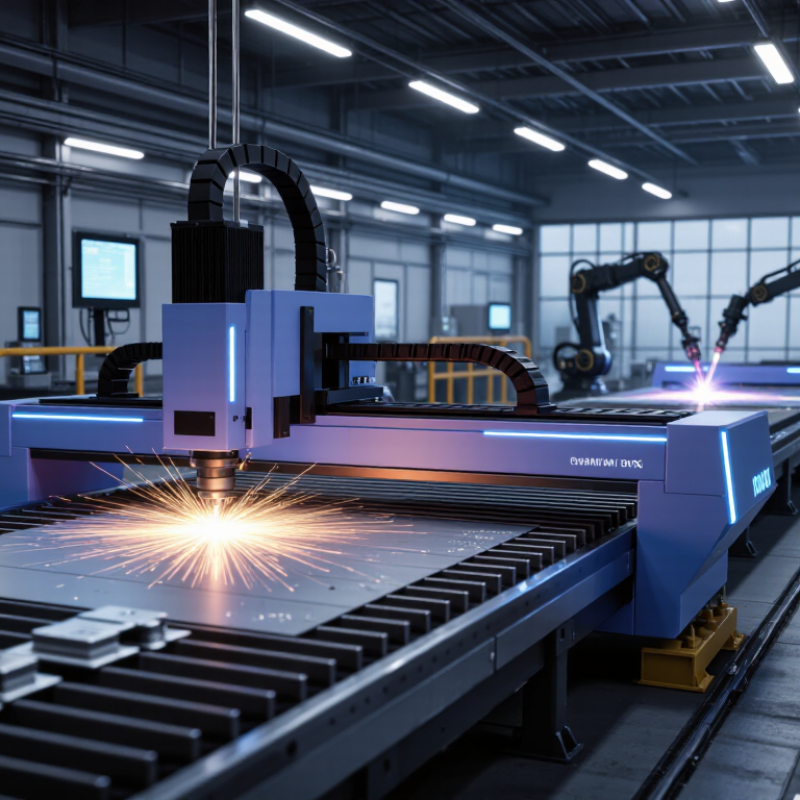
Top 10 Laser Machine Manufacturers in the World
What Laser Machines Are and How They Are Classified
A laser machine directs concentrated light onto a material to cut, mark, engrave, weld, or clean its surface. Its results depend on more than the laser itself. Lens condition, focus, motion control, material thickness, and operator settings all matter. A small shift in focus can leave a rough edge or a faint mark. Laser machines are commonly classified by their laser source, intended process, and working power. Fiber lasers are often used for metals, while CO2 systems are common for wood, acrylic, and some fabrics. UV lasers can produce fine marks on heat-sensitive materials. These are general tendencies, not guarantees; material coatings and machine configuration can change the outcome.
Tips: Match the machine to the material and task, then check the manufacturer’s specifications. Test settings on a small sample first. Keep ventilation and protective enclosures in mind, and follow the machine’s operating instructions. Small tests prevent costly surprises.
Another useful classification is by function: cutting machines prioritize controlled edges, engravers create depth or surface detail, and marking systems add contrast without necessarily removing much material. Some machines perform several tasks, but versatility may involve trade-offs in speed, precision, or setup time. Compare the working area, achievable thickness, software workflow, maintenance needs, and available service support—not just the advertised power. In practice, published specifications can be difficult to compare directly, so request clear test results for your actual material and intended application.
| No. | Laser Machine Category | Classification Basis | Typical Applications | Commonly Processed Materials | Practical Consideration |
|---|---|---|---|---|---|
| 1 | CO₂ Cutting and Engraving Machine | Gas laser; commonly emits infrared light near 10.6 μm | Cutting, engraving, and marking | Wood, acrylic, paper, textiles, leather, and some non-metals | Generally suited to many non-metallic materials; bare metals usually require a different laser type or a specialized configuration. |
| 2 | Fiber Laser Metal-Cutting Machine | Solid-state laser; typically uses a ytterbium-doped fiber source near 1 μm | Profile cutting of sheet metal and metal components | Carbon steel, stainless steel, aluminum, and other metals, subject to machine specifications | Cutting capacity depends on laser power, material, thickness, assist gas, and process settings. |
| 3 | Fiber Laser Marking Machine | Solid-state fiber laser; commonly near-infrared output | Part identification, serial marking, barcodes, and surface engraving | Many metals and selected engineered plastics | Mark appearance and depth vary with the material, coating, pulse settings, and marking method. |
| 4 | Nd:YAG Laser Welding or Marking Machine | Solid-state crystal laser; commonly operates near 1064 nm | Spot welding, seam welding, and marking | Metals and selected alloys | Available in pulsed and other configurations; suitability depends on the required weld or mark and the workpiece geometry. |
| 5 | Diode Laser Processing Machine | Semiconductor laser; wavelength depends on the diode design | Engraving, marking, heating, and selected cutting tasks | Material-dependent; often used on selected woods, plastics, and coated surfaces | Performance varies substantially by wavelength and output power; confirm material compatibility before processing. |
| 6 | UV Laser Marking Machine | Ultraviolet solid-state laser; 355 nm is a common wavelength | Fine marking, coding, and micro-processing | Selected plastics, glass, ceramics, and coated materials | Often selected for fine features and heat-sensitive applications, but results depend on the material and process parameters. |
| 7 | Ultrafast Laser Microprocessing Machine | Short-pulse laser, typically picosecond or femtosecond | Precision ablation, drilling, texturing, and micro-machining | Metals, glass, ceramics, semiconductors, and selected polymers | Very short pulses can limit heat diffusion around the processed area; throughput and quality depend on the application and setup. |
| 8 | Excimer Laser Processing Machine | Pulsed ultraviolet gas laser | Surface treatment, micromachining, and selected photolithography processes | Polymers, thin films, and selected semiconductor materials | Used in specialized applications where ultraviolet processing is appropriate; system requirements vary by process. |
| 9 | Green Laser Processing Machine | Visible green output, commonly around 532 nm | Marking, welding, and precision processing | Copper and other materials that can be challenging for some infrared laser processes | Absorption depends on the material, surface condition, wavelength, and process settings. |
| 10 | Laser Cladding Machine | Classified by process; commonly uses a fiber, diode, or other high-power laser source | Applying a metallurgical coating, repairing parts, and adding material to a surface | Metal components and compatible metal powders or feedstock | Cladding is a material-deposition process rather than a single laser-source category; results depend on feedstock and process control. |