7 Tips for Choosing the Right Flange Accessories
Choosing the right Flange Accessory is not a small detail. A gasket that looks suitable on a desk may fail to match the flange face, pressure rating, or service conditions. The same is true of bolts, nuts, washers, and insulating kits. Small differences matter. A few millimeters, the wrong material, or uneven bolt loading can lead to leaks and costly rework.
“Compatibility is proven at the joint, not guessed from a catalog.” That practical reminder comes from fictional flange specialist Daniel Mercer, created for this guide rather than presented as a real industry authority. Use it as a guiding principle: check the flange standard, dimensions, material, temperature, pressure, and fluid exposure before selecting accessories. Then verify supplier documentation and inspect parts for damage before installation.
This article introduces seven practical tips for making that choice with care. It considers fit, material selection, operating conditions, traceability, and installation needs. Measure twice. Ask for records. Still, no checklist replaces sound engineering judgment or the equipment manufacturer’s instructions. One detail is easy to miss: accessories that work in one assembly may not suit another, even when both look nearly identical. That deserves a second look.
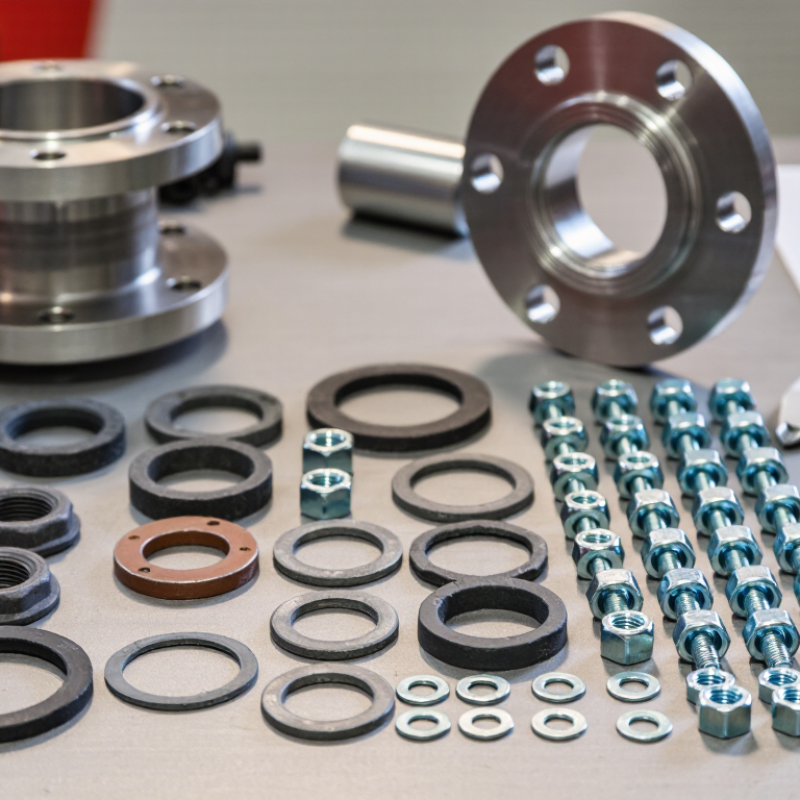
Identify the Flange Type and System Requirements
Before selecting flange accessories, identify the flange and the system it serves. Record its nominal size, pressure class, facing, and connection type, such as weld-neck or threaded. The facing matters: raised-face, flat-face, and ring-type joints require compatible gasket arrangements. Check the mating flange, too—not just the one on your bench. Small details matter. Compare material and temperature limits with the fluid, pressure, and operating cycle. A gasket may fit the bolt circle and still be unsuitable for the service.
Confirm bolt diameter, length, grade, and quantity against project drawings or specifications. Check accessory materials for corrosion exposure and expected heat. A water line and a hot process line may share a flange size yet need different gasket and bolting choices. Use the relevant flange standard to verify dimensions; appearance alone is not enough. If records conflict, pause and confirm the requirements with a qualified engineer or the responsible project contact. A rushed measurement can mislead, and even careful checks may miss a detail. Recheck uncertain dimensions before ordering.
Choose Accessories That Match the Connection’s Function
Flange accessories should be selected for the job each connection must perform, not simply because they fit the bolt holes. A gasket creates the seal, while bolts and nuts provide the clamping force that keeps the joint together. Check the service conditions, including pressure, temperature, and the fluid or gas in the line. A gasket that works well with water may not suit a hot process fluid. Material compatibility matters.
Look closely at the flange faces and the space around the joint. A raised face, for example, may require a gasket shaped and sized for that sealing surface. Use the specified bolt grade and length; bolts that are too short may not engage enough threads, while excessively long ones can obstruct nearby equipment. Small details matter.
Washers may help distribute load when the design calls for them, but adding extra parts without checking the joint requirements can change how force is applied. It is tempting to treat accessories as interchangeable. They are not always.
Review the equipment drawings and applicable specifications, and ask a qualified engineer when the connection’s duty or materials are uncertain. A quick fit in the workshop does not prove a reliable seal under operating conditions.
Check Dimensions, Pressure Ratings, and Applicable Standards
Before choosing flange accessories, confirm the flange’s nominal size and measure key dimensions. Check the outside diameter, bolt-circle diameter, hole count, and facing type against the equipment drawing. Small differences matter. A gasket that looks close may cover a sealing surface or leave part of it exposed. Record the measurements, and compare them with the applicable flange standard rather than relying on a quick visual match.
Tip: Check pressure ratings across the complete connection. The flange, gasket, bolts, and accessory must suit the system’s pressure and operating temperature. A pressure class alone does not guarantee compatibility; material and temperature can affect allowable limits. The weakest component can govern the assembly. Do not guess.
Confirm which standard applies to the installation, such as the specified ASME or EN series, and avoid mixing components with different dimensions or rating systems. Review manufacturer data sheets and project documents for material, facing, and temperature limits. If a drawing is unclear, pause and verify it with a qualified engineer or supplier. It may feel slower than ordering by size alone, but that shortcut can lead to poor fit, leakage, or replacement work. Check every marking against the actual application before purchase.
7 Tips for Choosing the Right Flange Accessories — Check Dimensions, Pressure Ratings, and Applicable Standards
This chart shows bolt-hole counts for selected NPS sizes of ASME B16.5 Class 150 flanges. Before selecting bolts, nuts, or gaskets, verify the flange size, facing, bolt pattern, pressure-temperature rating, material compatibility, gasket fit, and applicable standard. Confirm all dimensions against the project specification and the relevant standard edition.
Select Materials for the Fluid and Operating Environment
Choosing flange accessories starts with understanding the fluid, not just matching nominal pipe size. Check its chemistry, concentration, and temperature range against material compatibility data. A gasket exposed to hot, concentrated chemicals may behave differently from one handling a cool, diluted solution. Small details matter.
Consider every wetted component, including gaskets, bolts, and washers. Dissimilar metals can corrode when moisture creates an electrical path between them. A material chart helps, but it can make the choice look simpler than it is. Verify recommendations with current technical data, especially when fluids contain additives or change during cleaning.
The operating environment matters too. Outdoor moisture, salt spray, vibration, and frequent temperature swings can shorten service life. Stainless steel may resist many corrosive conditions, but its grade and exposure still matter. For high temperatures, confirm that both the gasket and fasteners retain their properties under the expected pressure and thermal cycling. Not always obvious. If conditions are uncertain, document the fluid and operating range, then ask a qualified engineer or supplier to review the selection. A small compatibility check now can prevent leaks, seized bolts, or premature replacement later.
Verify Product Quality and Installation Compatibility
7 Tips for Choosing the Right Flange Accessories
Verify Product Quality and Installation Compatibility
Check more than the product description. Ask for material specifications, dimensional details, and inspection records, then compare them with the project requirements. Look closely at flange size, facing type, pressure class, and service temperature. A gasket or bolt set can appear suitable yet fail to match the flange face or operating conditions. Small mismatches matter.
Tips: Inspect parts for dents, corrosion, damaged threads, and uneven gasket surfaces. Confirm that bolt diameter and length suit the flange thickness and gasket. Check that materials are compatible with the fluid and environment. If documentation is unclear, pause and ask a qualified supplier or engineer to verify the selection. Don’t guess.
Before installation, compare the accessories with the drawings and the actual connection. Clean mating surfaces and check alignment; forcing misaligned parts can create uneven loading. Follow the specified tightening sequence and torque guidance, using calibrated tools where required. Keep records of the parts installed and any checks performed. It takes a little time. I’ve seen tidy paperwork feel reassuring, but paperwork alone cannot prove a part fits; verify the physical dimensions too.
 North American Safety Valve Industries, Inc.