
7 Mini Fridge Compressor Buying Tips for Global Buyers

Choosing a Mini Fridge Compressor for an international market takes more than comparing prices. The right unit must match the refrigerator’s cooling needs, available power supply, installation space, and expected operating conditions. A compressor that performs well in a quiet showroom may behave differently in a warm kitchen, a small hotel room, or a vehicle.

Small details matter.

Start by checking voltage and frequency requirements against the destination market. Confirm the compressor’s cooling capacity, mounting dimensions, and refrigerant specifications with the appliance manufacturer or a qualified technician. Ask for product documentation, test information, warranty terms, and details about local service support. These checks can help prevent fit, performance, and maintenance problems after shipment. Noise and vibration deserve attention too, especially where the fridge will sit near a bed or work area.

The following seven buying tips give global buyers a practical framework for comparing models and suppliers. They cover capacity, compatibility, energy use, operating noise, durability, documentation, and after-sales support. No single specification tells the whole story. I have seen buyers focus heavily on price and overlook whether replacement parts are readily available; that choice can become expensive later. Supplier claims should be checked against clear technical data, not accepted on appearance alone. Use the guidance as a starting point, then verify the final selection with the appliance maker or a refrigeration professional. A little extra checking now can save time and avoid unpleasant surprises later.
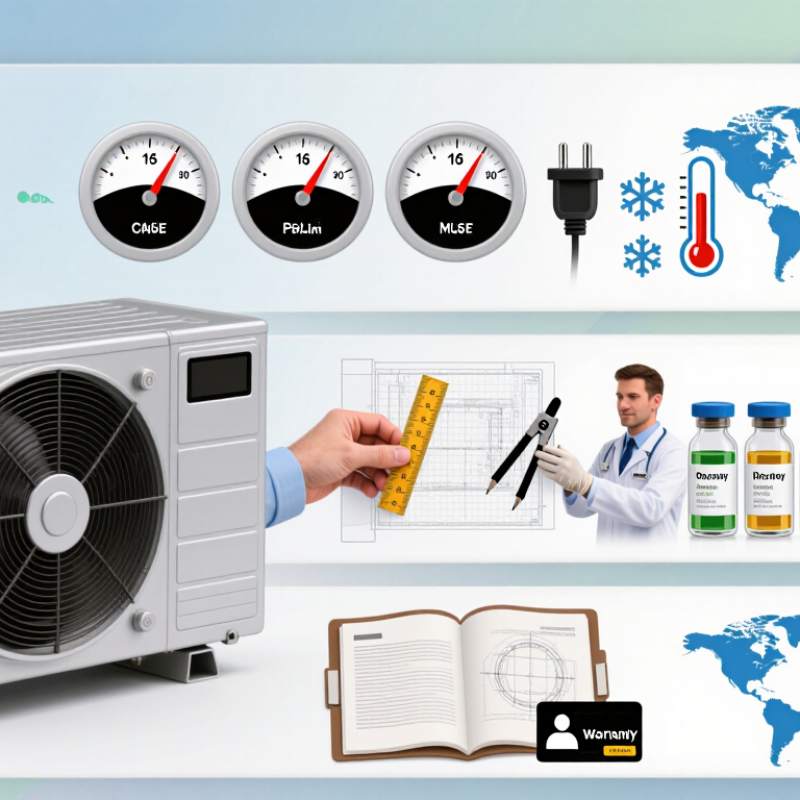
7 Mini Fridge Compressor Buying Tips for Global Buyers

Understanding Mini Fridge Compressor Types and Their Uses

Mini fridges usually use a sealed vapor-compression system. A reciprocating compressor suits everyday rooms, dorms, and small offices; it cycles on and off to keep food cold. Inverter models adjust compressor speed instead, which can reduce temperature swings and noise during lighter use. Rotary designs may fit compact layouts, but check service access and local support. Thermoelectric coolers are different: they have no compressor and generally suit drinks, not demanding food storage.

Efficiency matters, but match the compressor to the job. The International Energy Agency’s 2018 report, The Future of Cooling, projected that global energy demand for space cooling could more than triple by 2050. That figure concerns space cooling, not mini fridges; it still highlights why operating conditions matter. A warm garage, frequent door openings, or a packed cabinet can make any unit work harder. Small details count.

Tip For quiet bedrooms, compare stated noise levels and ask whether testing reflects normal cycling. For travel or vehicle use, verify the rated voltage and ventilation clearance. For steady daily storage, check usable volume, climate rating, and energy consumption on the product label. A neat spec sheet cannot predict every warm kitchen. I would also leave room for airflow behind the fridge, even when the manual’s minimum clearance seems inconvenient.

Matching Cooling Capacity to Your Space and Storage Needs

For a mini fridge, match compressor capacity to the room it must cool and the items you actually store. A 45-liter unit may suit drinks and a few lunch containers, but bulky bottles can quickly consume its usable space. Check internal shelf dimensions, not just the advertised volume. Also measure the floor area, door swing, and ventilation gap; a tight cabinet can trap heat around the compressor. Leave room for airflow. A larger compressor is not automatically better: frequent short cooling cycles may waste energy, while an undersized system can struggle in a warm room or with frequent door openings.

Treat capacity figures as a starting point. List the items you plan to chill, including their height, then allow space for air to circulate. ENERGY STAR reports that certified refrigerators use about 9% less energy than models meeting the U.S. federal minimum standard. That figure covers refrigerators broadly, so it is not a direct sizing rule for every compact compressor model. Compare each unit’s stated daily energy use and test conditions where available. A small detail matters: placing warm groceries inside can raise the cabinet temperature and extend compressor run time. Real use is rarely as neat as a specification sheet.

Comparing Energy Efficiency, Noise, and Climate Performance

7 Mini Fridge Compressor Buying Tips for Global Buyers

For global buyers, energy efficiency depends on the room as well as the compressor. A unit beside a sunny window may run longer than one in a cool office. ENERGY STAR’s compact-refrigerator criteria call for certified models to use at least 10% less energy than conventional models (ENERGY STAR, 2024). Compare annual kWh figures, not compressor wattage alone. Small detail, real impact. Leave space around the condenser, too; trapped heat can undermine performance.

Noise matters in bedrooms, hotel rooms, and shared offices. Check the sound-power rating on the product label, then consider where the fridge will sit. EU Regulation 2019/2016 groups refrigerator noise into classes from A, the quietest, to D. Yet a label cannot fully predict how a compressor sounds against a bare wall at night. If possible, listen to a running sample.

Climate class deserves equal attention. IEC 62552 defines operating ranges: class N is designed for 16–32°C ambient temperatures, while class T covers 16–43°C. Match the rating to the actual room, not just the country. A warm storeroom can expose a mismatch quickly. Specifications help, but they are not a perfect substitute for real-world testing.

Checking Voltage, Refrigerants, and Regional Certifications

Before choosing a mini fridge compressor, match its nameplate voltage and frequency to the destination market. A 110–120 V, 60 Hz unit is not automatically compatible with a 220–240 V, 50 Hz supply. Inverter models may accept a wider range, but only when the manufacturer’s specifications confirm it. Check the rated current, starting current, wiring diagram, and plug configuration. A familiar-looking plug proves little. The International Energy Agency’s 2018 Future of Cooling report projects that global energy demand for space cooling could more than triple by 2050. Efficient operation matters, but an electrical mismatch can undermine it.

Check the refrigerant type, charge, and declared global warming potential. The IPCC Sixth Assessment Report lists R134a at a 100-year GWP of 1,530 and R600a at 0.006; figures depend on the assessment basis. Lower GWP does not remove the need to check equipment compatibility and safe handling requirements.

Small label, big risk.

Request the compressor data sheet and refrigerant declaration, then confirm that regional conformity documents cover the finished appliance and its electrical safety. IEC 60335-2-24 is a relevant safety standard for household refrigerating appliances, but a reference to a standard alone is not proof of approval. Requirements differ by market. I still verify twice. Ask for test reports and certificates that name the intended destination, rather than relying on a generic “international” claim.

Evaluating Supplier Quality, Warranty, and After-Sales Support

7 Mini Fridge Compressor Buying Tips for Global Buyers

For a mini fridge compressor, supplier quality is more than a clean factory photo. Ask for batch-level test records showing start-up current, noise, and cooling performance under stated ambient conditions. Request sample results, then compare them with your own incoming inspection. UNEP and the Cool Coalition’s 2023 Global Cooling Watch projects that cooling capacity could more than triple by 2050 under a business-as-usual scenario. That growth makes dependable components and service arrangements increasingly important. Still, a polished audit does not prove every production batch will match.

Tip: Put the warranty terms in writing. Check whether coverage applies to the compressor alone or the complete cooling system, and confirm the claim period, exclusions, and proof required. Ask how quickly the supplier acknowledges a fault, who pays for shipping, and whether replacement parts are kept near your sales region. A low price can become costly when one small relay or compressor delays repairs for weeks.

Before ordering, test the supplier’s after-sales process with a practical question: request a sample troubleshooting guide and a named technical contact. Check whether documents include wiring details, safe installation limits, and clear fault codes. Ask for spare-part lead times and a realistic escalation route. Keep the first order modest, if possible, and record response times. Supplier promises matter, but actual follow-through matters more. A checklist helps, though it cannot replace a real service test.

7 Mini Fridge Compressor Buying Tips for Global Buyers - Evaluating Supplier Quality, Warranty, and After-Sales Support

Buying tip What to evaluate Evidence to request Practical buyer check
1. Match the compressor to the application Confirm the compressor is suitable for the refrigerator’s refrigerant, cooling capacity, operating temperatures, and intended use. Compressor model datasheet, refrigerant compatibility information, and application guidance from the supplier. Compare the compressor specifications with the appliance design and expected ambient conditions; do not select by size or price alone.
2. Verify supplier quality controls Review how incoming parts, production processes, and finished compressors are controlled and traceable. Quality-management documentation, inspection records, process-control details, and sample test reports relevant to the product. Check that documents identify the compressor model and test conditions, and that production batches can be traced.
3. Check performance under stated conditions Assess cooling capacity, power consumption, starting behavior, noise, and operating range using clearly stated test conditions. Performance data with the refrigerant, voltage, frequency, ambient temperature, and test method specified. Compare like-for-like test data; figures measured under different conditions may not be directly comparable.
4. Confirm electrical and market requirements Make sure the compressor and its intended appliance configuration suit the destination market’s voltage, frequency, and applicable regulatory requirements. Electrical ratings, relevant test reports, and compliance documents applicable to the target product and market. Verify requirements with the importer or a qualified compliance professional; certifications and obligations vary by market and product configuration.
5. Define warranty terms in writing Clarify the warranty period, start date, covered components, exclusions, claim process, and responsibility for transport or labor costs. Written warranty terms tied to the quotation, purchase order, or supply agreement. Check whether coverage begins at shipment, delivery, or commissioning, and document any required installation or claim records.
6. Evaluate after-sales support Assess technical response channels, troubleshooting support, spare-parts availability, and escalation arrangements. Support contact details, service procedures, spare-parts information, and expected response or resolution process. Ask how faults are diagnosed remotely and how replacement parts or warranty claims are handled in your destination region.
7. Validate samples and delivery readiness Confirm product consistency, packaging suitability, lead-time assumptions, and shipment documentation before placing a larger order. Pre-production or evaluation samples, agreed inspection criteria, packaging details, and a proposed shipping-document checklist. Test samples in the intended appliance where feasible, agree acceptance criteria in advance, and confirm order quantities and delivery terms in writing.