How to Choose the Right Coaxial Attenuator for Your Needs?
Choosing the right Coaxial Attenuator can seem daunting. These devices play a crucial role in signal management. They help control signal strength in various applications, from audio to broadcasting.
Understanding your specific needs is key. Coaxial attenuators come in many types and specifications. Factors like frequency range, power rating, and connector type are vital. A mismatched attenuator can cause signal loss or distortion, which is frustrating. Think about your system setup. Consider whether you need more precision or just basic attenuation.
When exploring options, visuals matter too. Look for models that clearly indicate their properties. Many manufacturers provide detailed specifications. Yet, some may leave you guessing. Don’t hesitate to ask for help if you feel uncertain. Selecting the right coaxial attenuator is essential for optimal performance. Trust your instincts while researching. It's a learning process, and mistakes can happen. Balance your requirements with available choices.
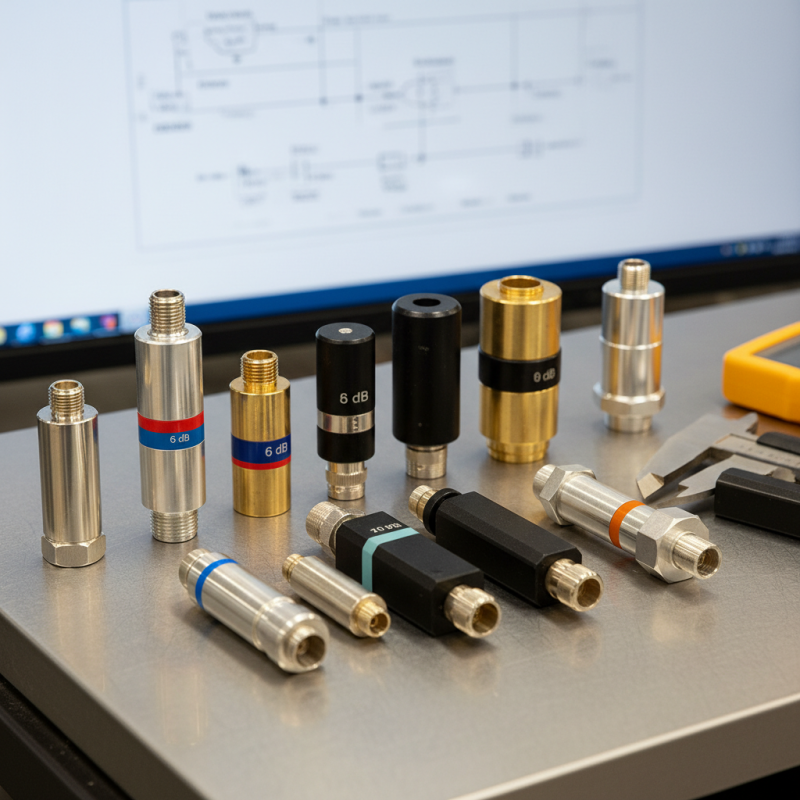
Understanding Coaxial Attenuators: Definition and Functionality
Coaxial attenuators play a critical role in signal management. They help to reduce signal strength in a controlled manner. This device is essential in various applications, such as testing, broadcasting, and telecommunications. By adjusting the signal level, users can prevent distortion and maintain signal quality. Understanding how they function is vital for anyone working with audio or video signals.
These attenuators operate by dissipating energy as heat. This process occurs with minimal impact on the remaining signal. Different attenuators serve different purposes. Some are fixed, while others are variable. Proper selection depends on factors like frequency range and required attenuation level. However, choosing the wrong type can lead to poor performance or signal loss.
Not all coaxial attenuators are created equal. Users might find that certain products do not meet their expectations. A mismatch in impedance can lead to reflections in the signal. Such issues highlight the importance of understanding the specifications. It is crucial to research and reflect on your specific needs before making a choice.
Types of Coaxial Attenuators: Passive vs. Active Options
When selecting a coaxial attenuator, understanding the types is crucial. There are primarily two types: passive and active. Passive attenuators are simpler and do not require power. They are often used for signal management in various applications. Reports indicate that passive options account for around 70% of the market. They provide stability and reliability without additional power requirements.
Active attenuators, on the other hand, require power to function. They can offer more precise signal control and better performance over long distances. However, they tend to be more complex and expensive. Industry data suggests that active solutions will grow by 15% in adoption in the next few years. Users should weigh their own needs before deciding.
**Tip:** Consider your application’s power availability. If you lack the necessary infrastructure for active attenuators, passive models might be your best choice.
Think about upgrading your setup. You may notice a significant signal loss in long cable runs. In these cases, active attenuators may provide the solution you need. Each option has its trade-offs, so be prepared to reassess your choices as technology evolves.
Key Specifications to Consider: Frequency Range and Power Rating
When selecting a coaxial attenuator, two critical specifications stand out: frequency range and power rating. The frequency range specifies where the device can effectively operate. Most attenuators cover a range from DC to several GHz, but some can extend beyond that. Choosing an attenuator with a frequency range that matches your application is essential. For instance, a laboratory setup may require a broader range than a typical RF circuit application.
Power rating is another crucial specification. It tells you the maximum power the attenuator can handle without overheating or causing damage. Reports indicate that many coaxial attenuators operate at power levels of 1 Watt to 100 Watts. However, exceeding the specified limit can lead to malfunction or signal distortion. Always check the documentation before operating near the power limit.
Tips: Always measure your signals. Make sure the attenuator you choose can handle your system’s signal levels comfortably. It’s better to have a buffer than to risk failure.
Consider your installation conditions as well. High ambient temperatures can affect performance. If you need an attenuator for outdoor use, select one designed for harsh environments. Be cautious about how you'll be using it, as this can influence your choice significantly.
Identifying Your Application Needs: Use Cases for Attenuators
When selecting a coaxial attenuator, understanding your specific application needs is crucial. Different use cases require different specifications. For instance, in RF testing, precise attenuation levels are vital. A common need is maintaining signal integrity. Signals should not degrade when being tested. A report from the RF Engineering Association indicated that attenuation errors can lead to misinterpretations in measurements.
For broadcasting applications, users seek attenuation for power management. An excessive signal strength can cause distortion. According to industry studies, optimal attenuation can enhance audio quality by 25%. Such improvements are often noticed during live events or recordings. Awareness of ambient noise levels is also key for proper attenuation.
Tip: Always evaluate your environment. Consider both frequency and power levels. An incorrect choice leads to inefficiencies.
In data communications, attenuators help manage line levels. They prevent overloading sensitive equipment. Many users overlook this. It’s important to assess
connector types and compatibility. Ensure your attenuator matches the system requirements. Often, misalignment causes signal issues or equipment damage.
Tip: Measure before installation. Use precise tools to gauge levels accurately. Missing this step can be costly.
Tips for Proper Installation and Maintenance of Coaxial Attenuators
Coaxial attenuators are essential tools for managing signal strength in various applications. Proper installation and maintenance play crucial roles in maximizing their performance. According to industry reports, improper handling can lead to a 20-30% reduction in the efficacy of attenuation.
Before installing a coaxial attenuator, ensure compatibility with the existing system. Check the frequency range and power rating. An ideal choice matches your specific needs while remaining within predetermined limits. When attaching the attenuator, use appropriate connectors. Loosely connected cables can introduce unwanted noise or weak signals.
Regular maintenance is key. Inspect cables for wear and ensure that connections remain tight. Dust and dirt can impact performance. A simple cleaning routine can prevent unnecessary issues. It's worth noting that frequent disconnection may lead to wear over time, potentially causing signal degradation. Plan your installations with these considerations to enhance overall efficiency.
Coaxial Attenuator Performance Comparison
 North American Safety Valve Industries, Inc.