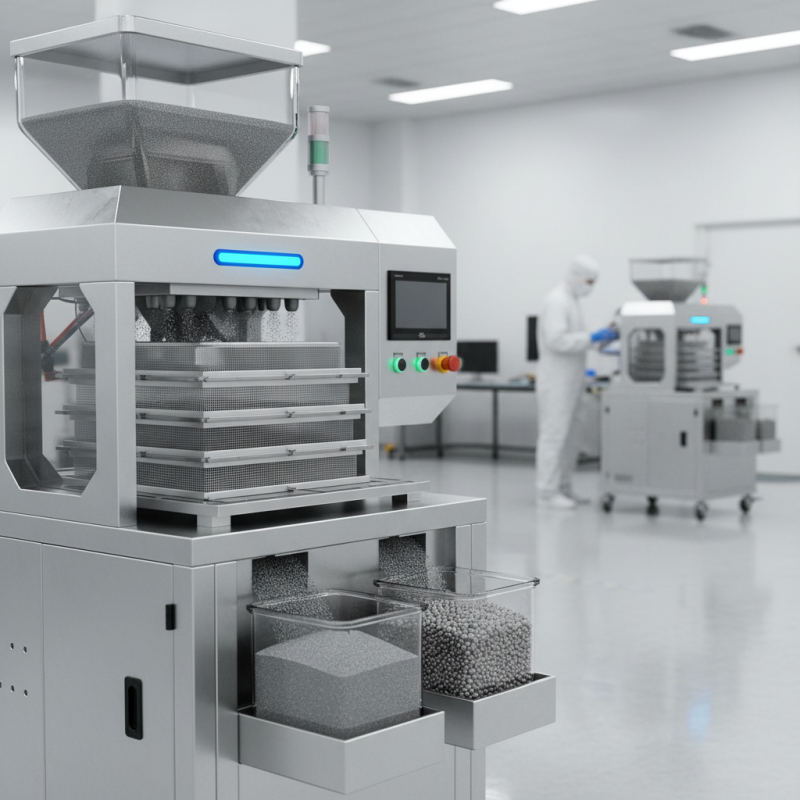
How to Choose the Best Alloy Powder Grader for Your Needs?
Choosing the right Alloy Powder Grader can significantly impact your manufacturing process. Different industries require unique properties from these graders. It’s essential to understand your specific needs before making a decision.
Consider factors such as material compatibility and grading precision. Not all graders are built the same. Some may not meet your requirements, which could lead to inefficiencies. Poor choices can result in wasted time and resources. Reflect on what you truly need.
Think about whether you need a mobile or stationary Alloy Powder Grader. Your workspace can dictate this choice. A suitable grader enhances production quality. Choose wisely, or you may face challenges down the road.
Factors to Consider When Selecting an Alloy Powder Grader
Choosing the right alloy powder grader can be challenging. There are many factors to consider. Different applications require different grading solutions. A good understanding of your needs is essential.
Start by evaluating the particle size distribution you need. Consider if your application demands fine powders or larger granules. The grading machine should offer versatility to accommodate these needs. Look for options that include adjustable settings. This allows for easy modifications as requirements change.
Tips: Inspect the material quality of the grader. It should be durable and resistant to wear. Check feedback from other users. This can reveal potential issues or advantages you may not have noticed.
Another consideration is the speed of operation. Some graders manage faster throughput than others. If you work in a high-demand environment, you need efficiency. However, excessive speed might compromise accuracy. Balancing speed and precision is key in forming a practical solution.
Tips: Make sure to review the product specifications carefully. Sometimes, numbers can be deceiving. What looks good on paper may not work in practice. Test the machine or ask for a demo, if possible.
Types of Alloy Powder Graders and Their Applications
When looking for an alloy powder grader, it's essential to understand the available types. Common classifications include vibratory graders, air classifiers, and rotary screens. Each type caters to specific applications. Vibratory graders are known for their efficiency in sorting fine powders. They work well for alloys requiring precise particle size distribution. Their rapid sorting capability enhances production speed.
Air classifiers utilize airflow to separate particles based on weight. This method is particularly effective for lighter powders. It’s ideal for applications needing a high level of separation precision. However, the design can be complex. Users must consider maintenance requirements. Rotary screens, on the other hand, offer a straightforward solution. They are easy to operate but can struggle with very fine sizes.
Different industries have distinct needs. Aerospace might demand stricter tolerances than automotive. Assessing your application is crucial. Each type has unique benefits and drawbacks. It may take time to find the right balance for your operation. Engaging in research and trials can lead to better outcomes.
Key Features to Look for in Alloy Powder Graders
When selecting an alloy powder grader, focus on several key features. Efficiency in particle size distribution is crucial. A study from the Metal Powder Industries Federation highlights that nearly 70% of metal powder applications require precise particle sizing. This precision influences both performance and quality in applications like additive manufacturing.
Another aspect to consider is the grader's operational capacity. Many graders handle large volumes, but some struggle with consistency. A report by the International Journal of Powder Metallurgy notes that inconsistency can lead to defects, affecting material properties. Look for a model that balances throughput and accuracy.
User-friendliness is also essential. Complex systems may require specialized training, complicating operations. Choose a grader that provides clear interfaces and easy calibration options. If the system is difficult to operate, it can hinder productivity. Remember, an intuitive design can make a significant difference in daily operations. Ultimately, ensure the grader meets specific requirements while being adaptable for future needs.
Comparative Analysis of Top Alloy Powder Grader Brands
When selecting an alloy powder grader, it's crucial to evaluate multiple brands based on performance and precision. A recent industry report indicates that accuracy varies widely. Some graders deliver results within 5% of the target specifications, while others might have discrepancies up to 15%. This inconsistency can significantly impact material quality.
Another key factor is the grading speed. Top-grade models often achieve processing rates of 200 kg/h. In contrast, lower-end devices may struggle with only 50 kg/h. High throughput ensures efficiency in production runs, but not all options can maintain accuracy at these rates. Users should consider their specific needs in terms of both speed and precision.
Additionally, the user experience varies. Some graders have simple controls, while others offer advanced settings that can be confusing. It's essential to find a balance between functionality and ease of use. A recent study showed that 30% of operators struggled with overly complex models. This problem can lead to operational errors and inefficiencies. Selecting a user-friendly grader might mitigate such issues.
Maintenance and Care Tips for Alloy Powder Graders
When it comes to alloy powder graders, maintenance is vital. Proper care can extend the lifespan of your equipment. Regular cleaning helps prevent contamination, which can affect grading efficiency.
Tips: Clean your grader after each use. Use a soft cloth and non-abrasive cleaners. Inspect moving parts for wear. Simple checks can save significant costs.
Calibration is another critical aspect. Incorrect calibration can lead to inconsistent results, impacting your production quality. Reports indicate that nearly 15% of users overlook this. Periodic calibration ensures accuracy.
Tips: Schedule monthly calibration checks. Use standard reference materials for precise adjustments. Always document your calibration results. This can help track performance over time.
Lastly, consider the environment where the grader operates. Dust and humidity can influence functionality. Regularly monitor your working conditions. This helps to identify potential issues early, preventing costly repairs.
Alloy Powder Grader Performance Comparison
This bar chart compares the efficiency of different alloy powder graders. Higher percentages indicate better performance, helping you to choose the best grader suited for your needs.
 North American Safety Valve Industries, Inc.