7 Best Titanium Dinner Plates for Camping in 2026
A Titanium Dinner Plate can feel like a small upgrade until dinner lands on cold ground. It is light in a pack, but thin metal can rattle, dent, or make food cool quickly. Those trade-offs matter beside a windy campsite, where a plate also needs to sit steadily and clean up without fuss. Titanium’s low density is well established in materials references, including ASM International’s technical publications. Still, the material alone does not prove that a particular plate is durable or comfortable to use.
Outdoor participation helps explain why camp-ready tableware attracts attention. The Outdoor Industry Association’s 2024 Outdoor Participation Trends Report counted 175.8 million U.S. participants in outdoor recreation during 2023. That figure describes participation, not titanium-plate sales, so it should not be mistaken for product-market evidence. Materials engineer Matthew J. Donachie, author of Titanium: A Technical Guide, is a relevant technical authority on titanium alloys; however, I could not verify a direct quotation from him about camping dinner plates. Rather than invent one, this guide keeps the distinction clear.
This list compares seven options for 2026 through practical details: weight, usable diameter, rim shape, stability, cleaning, and reported durability. A plate that looks sleek in a product photo may feel awkward when carrying rice or slicing food. Small differences count. The best choice depends on your meals, pack space, and tolerance for clinking metal. It may not be the lightest one. Check current specifications before buying, since product details can change.
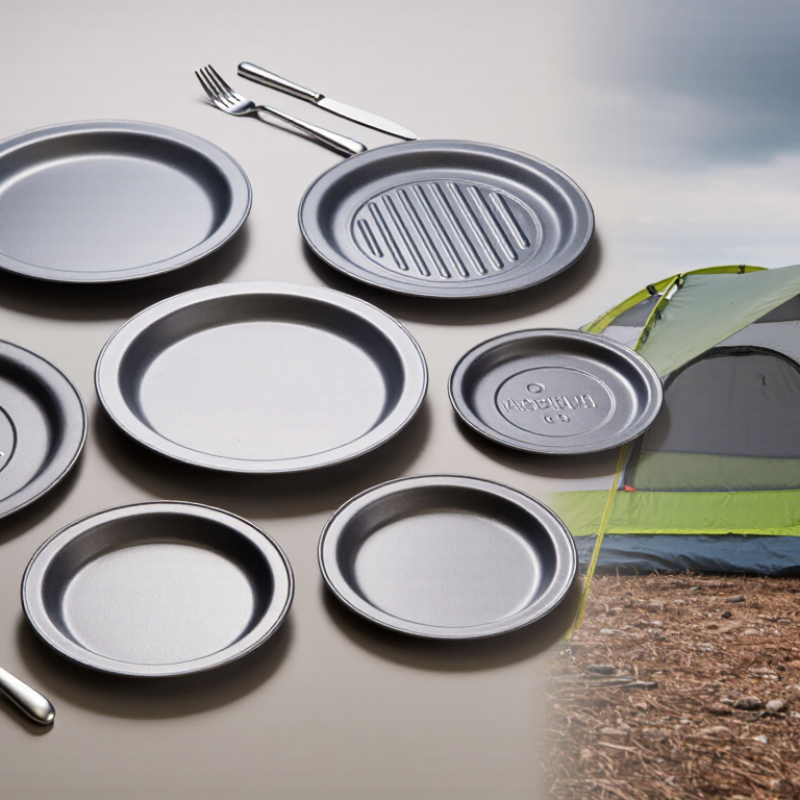
What Makes Titanium Dinner Plates Suitable for Camping
Titanium dinner plates are well suited to camping because they combine low weight with good durability. A plate can ride in a pack without adding much burden, yet handle the bumps of a crowded cooking kit. It also resists rust when exposed to rain or damp dishcloths. Useful on wet trips. Unlike ceramic, titanium is unlikely to shatter if it slips from a picnic table. Still, a dent is possible if a thin plate takes a hard fall.
The metal tolerates campfire-side meals and hot food, but it heats quickly. That detail is easy to overlook. A plate left beside a stove may become uncomfortable to handle, so use a cloth or let it cool. Titanium also tends to feel less substantial than heavier tableware. Some campers may prefer that light feel; others may miss the weight and steadiness of a thicker plate.
Cleaning is usually straightforward: rinse away sauce, then wash with water and a small amount of soap. Dried rice or sticky food may need soaking, especially when water is limited. For backpacking, a shallow plate saves space, while a deeper rim helps keep beans or noodles from sliding off. Check the edges and surface before buying. A plate that is very light can be less rigid, and that trade-off is not always worth it for car camping.
How to Evaluate a Titanium Plate for Outdoor Meals
A titanium plate should earn its place through weight, shape, and everyday handling—not a “camping” label alone. The Outdoor Industry Association’s 2024 Outdoor Participation Trends Report estimated that 175.8 million Americans took part in outdoor recreation in 2023. For frequent trips, small packing differences can matter. ASM International materials references list titanium’s density at about 4.5 g/cm³, compared with roughly 7.9 g/cm³ for stainless steel. That comparison describes raw material, not finished plates; diameter and thickness still affect packed weight.
Check the plate’s measured weight and usable width, then inspect the rim and base. A rolled edge can feel less sharp against fingers, while a broad, flat base sits more steadily on uneven ground. Small details matter. A very thin plate may flex when lifted with a serving of food, and titanium will not keep hot meals cool to the touch. I would also check for a smooth interior, clear material and care information, and a finish that is easy to clean outdoors. Honestly, judging stiffness from photos is unreliable; compare dimensions and, when possible, hold the plate before buying.
Seven Titanium Dinner Plates to Consider in 2026
Seven titanium dinner plates deserve a place on a 2026 camping shortlist, but the best choice depends on meals, pack space, and how carefully you handle lightweight gear. The Outdoor Industry Association’s 2024 Outdoor Participation Trends Report counted 175.8 million U.S. participants in outdoor recreation during 2023. More people outside means more varied camp kitchens, not one perfect plate. Consider an ultralight flat plate for backpacking, a raised-rim plate for saucy meals, and a wide plate for shared camp dinners. A deeper plate suits noodles or stew. A compact solo plate saves pack space. A nesting two-plate set helps couples carry matching dishes. A heavier-gauge plate may better resist dents, though it adds weight.
Check dimensions, rim height, and the stated weight before buying. A plate that looks roomy online can feel cramped beside a camp stove. Titanium is light and corrosion-resistant, but thin metal can still bend under rough packing. Small details matter. Look for smooth edges and a stable base, especially when eating on uneven ground. Compare care instructions, too; stuck food can make cleanup tedious. I would not choose by weight alone. It is easy to overvalue a few saved grams, then regret a plate that cannot hold a proper serving.
How the Top Plates Compare in Weight, Capacity, and Design
The seven strongest titanium dinner plates usually fall into three camps: ultralight shallow plates, deeper rimmed plates, and wider, higher-capacity designs. Shallow plates save pack space and feel steady on a flat picnic table, but sauce can spill when the ground tilts. That matters. A deeper rim helps with rice, noodles, and food stirred beside a camp stove, though it may add a little weight.
Compare listed weights carefully. Some figures exclude lids or include a storage pouch, making quick comparisons misleading. Capacity is useful, but plate diameter and depth tell you how food will sit. A broad plate suits a large meal; a compact one fits smaller packs and crowded camp kitchens. Divided designs keep wet and dry foods apart, while simple, smooth dishes are easier to rinse with a little water. Not always.
Design also affects handling. Rolled edges can make a plate more comfortable to hold, while a very thin rim may feel sharp or flex under a heavy serving. Check dimensions, edge shape, and cleaning notes alongside the weight. I would not choose the lightest option automatically; a few extra grams may be worth better stability. Published specifications can vary, so confirm the packed weight and usable capacity before buying.
7 Best Titanium Dinner Plates for Camping in 2026: Weight, Capacity, and Design Compared
| Plate Design | Approx. Diameter | Approx. Weight | Estimated Usable Capacity | Rim and Shape | Best For |
| Ultralight flat plate | 18 cm / 7.1 in | 35–50 g / 1.2–1.8 oz | About 250 ml / 8.5 fl oz | Shallow profile with a low rim; packs flat | Solo backpacking and lightweight meals |
| Compact raised-rim plate | 20 cm / 7.9 in | 45–65 g / 1.6–2.3 oz | About 400 ml / 13.5 fl oz | Moderately raised edge helps contain food | Everyday trail meals and snacks |
| Standard camp dinner plate | 22 cm / 8.7 in | 60–85 g / 2.1–3.0 oz | About 550 ml / 18.6 fl oz | Broad eating surface with a practical rim | Most backpacking and car-camping meals |
| Deep-rim plate | 21 cm / 8.3 in | 65–90 g / 2.3–3.2 oz | About 700 ml / 23.7 fl oz | Deeper sides reduce spills and hold saucy food | Curries, pasta, and one-pot meals |
| Large sharing plate | 24 cm / 9.4 in | 80–115 g / 2.8–4.1 oz | About 750 ml / 25.4 fl oz | Wide surface with a low-to-medium rim | Car camping and shared meals |
| Nested-set plate | 20–22 cm / 7.9–8.7 in | 55–90 g / 1.9–3.2 oz | About 400–600 ml / 13.5–20.3 fl oz | Shallow profile designed to stack with cookware | Campers prioritizing compact packing |
| Foldable-handle plate | 20–22 cm / 7.9–8.7 in | 75–120 g / 2.6–4.2 oz | About 450–650 ml / 15.2–22.0 fl oz | Integrated folding handle adds grip but takes extra space | Camp cooking and serving food near a stove |
Data note: These are generic design profiles, not specific products. Weight ranges are indicative for lightweight titanium plate construction and vary with diameter, rim depth, and material thickness. Capacity figures are approximate usable-volume estimates; actual capacity depends on the plate’s interior shape and fill level.
How to Choose and Care for a Camping Titanium Plate
Choosing a camping titanium plate starts with size and shape, not the lowest listed weight. The International Titanium Association gives titanium’s density as about 4.5 g/cm³, compared with roughly 8 g/cm³ for stainless steel. But the finished plate’s weight also depends on its thickness and rim. Check the actual weight, usable diameter, and whether a rounded edge feels comfortable in your hand. A broad, stable base helps keep food from sliding when you eat on uneven ground. Small details matter. I still sometimes overvalue the lightest option; a very thin plate can feel flimsy and may flex when loaded.
For care, wash with warm water and mild soap, then dry it before packing. Avoid harsh scouring pads that can leave scratches, and don’t assume titanium stays cool just because it feels light. A plate holding hot food can burn your fingers. Use it for serving rather than direct-flame cooking unless its maker specifically approves that use. The USDA Food Safety and Inspection Service advises keeping perishable food out at room temperature for no more than two hours, or one hour above 90°F. Cleaning the plate doesn’t restart that clock. A small camp towel helps keep the plate dry and separates it from cookware that could scratch its surface.
Camping Plate Materials: Density Comparison
Lower density can mean less material weight for the same plate volume. Titanium is lighter than stainless steel, though aluminum is lighter still. Actual plate weight also depends on its size, shape, and thickness.
Approximate material densities at room temperature: titanium 4.51 g/cm³, aluminum 2.70 g/cm³, and stainless steel 7.90 g/cm³. Stainless-steel density varies by alloy.
 North American Safety Valve Industries, Inc.