2026 Best PVC Layflat Hose for Water Transfer
Choosing the 2026 best Pvc Layflat Hose for water transfer is not just a matter of finding the thickest or cheapest option. A suitable Pvc Layflat Hose should match the pump, water source, flow requirements, and working conditions. Check the hose’s stated working pressure and temperature range, then compare them with the demands of your setup. Leave a sensible margin; pump surges and long runs can change the pressure a hose experiences.
Details matter. Measure the required diameter and route, including bends and elevation changes. A narrow hose may restrict flow, while an oversized one can be heavier and harder to handle. For field use, look at the outer cover, reinforcement, and coupling compatibility. Gravel, concrete edges, and repeated dragging can wear down a hose over time. Not every job needs the same construction. That is easy to overlook.
This guide explains what to compare before buying, from material and pressure ratings to storage and maintenance. It also considers practical differences between moving water across a farm, draining a site, or supplying temporary lines. Read product specifications carefully, and confirm ratings with the manufacturer when conditions are demanding. A label alone is not the whole story. Inspect the hose and fittings before use, and replace damaged components rather than relying on appearance. Even good equipment has limits. The right choice depends on the job—and sometimes the first choice needs a second look.
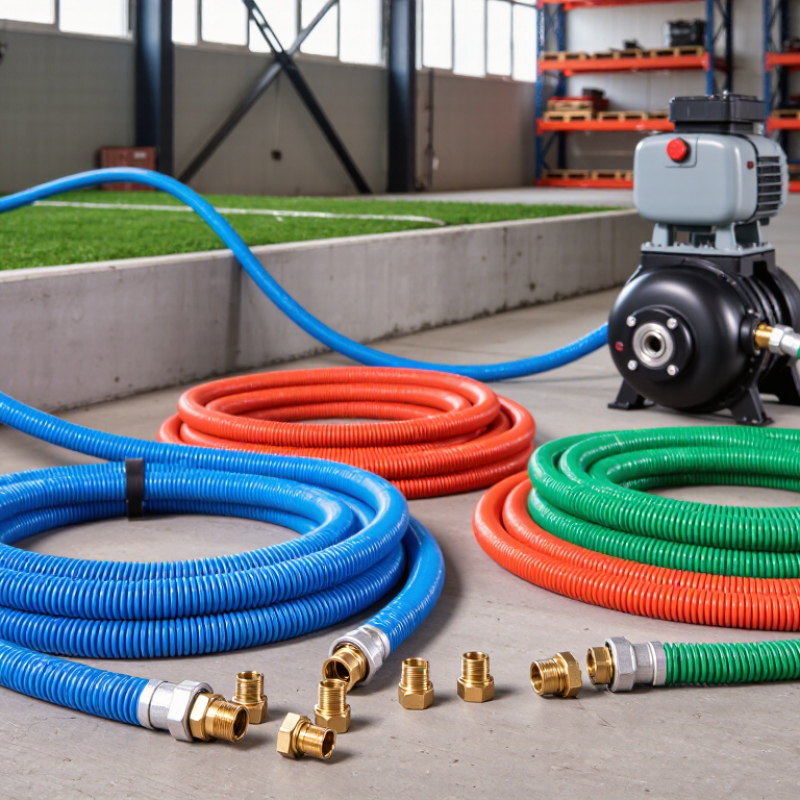
PVC Layflat Hose Basics: Typical 1–12 in Sizes and Reinforced PVC Layers
PVC layflat hose is commonly specified in nominal diameters from 1 to 12 inches. The diameter affects flow capacity, but it does not determine it alone. Length, pump output, elevation changes, and bends all influence delivery. A 2-inch hose feeding a long uphill run can behave very differently from the same hose on level ground. Check the manufacturer’s stated internal diameter, working pressure, and burst pressure, not just the size printed on the hose. ISO 1307:2006 covers dimensions and tolerances for rubber and plastics hoses; it is a useful reference, but it does not certify every hose for every water-transfer task.
Most PVC layflat hoses use a flexible inner PVC tube with textile reinforcement, often polyester yarn, embedded between PVC layers. The reinforcement helps the hose resist pressure and handling strain; the outer layer shields it from abrasion and weather. Construction varies, so layer count alone is not a reliable strength rating. Look for documented pressure ratings at the intended temperature. Leave room for imperfect conditions. A sharp stone under a full hose can still cause trouble. FAO’s AQUASTAT database puts agriculture’s share of global freshwater withdrawals at roughly 70%, though the figure varies by region and year. That scale helps explain why reliable transfer equipment matters, but it cannot replace sizing a hose for the actual pump, route, and operating pressure.
Working Pressure: Compare Typical 2–10 bar Ratings by Hose Size
PVC layflat hose working pressures commonly span about 2–10 bar, but diameter alone does not determine the safe limit. As a rough comparison, 25–38 mm hoses may be rated around 6–10 bar, 50–75 mm hoses around 4–8 bar, and hoses 100 mm or larger around 2–4 bar. Actual ranges vary with reinforcement and construction. Treat these figures as a screening guide, not a product specification.
A thicker woven reinforcement can support higher pressure, while heat, wear, and repeated folding may reduce service life. Check that the stated figure is the working pressure, not the burst pressure. The hose, couplings, clamps, and pump connection all need suitable ratings. Check the label. A weak fitting can leak even when the hose itself is correctly rated.
It is tempting to select the highest pressure number available. That can be a poor fit: a large-diameter hose may move water efficiently at lower pressure, while a long run or uphill route increases system demand. Compare the rating with the pump’s maximum output and expected operating conditions. A common planning mistake is to assume diameter predicts pressure reliably; it does not. Confirm the manufacturer’s data, especially if the hose will run warm or remain pressurized for long periods.
Materials and Standards: Reinforcement, ISO 1307 Sizes, and Couplings
2026 Best PVC Layflat Hose for Water Transfer
PVC layflat hose uses a flexible wall and woven reinforcement to carry water under pressure. Polyester yarn is commonly arranged in a circular weave, helping resist expansion and handling loads. The reinforcement matters. A higher burst figure alone does not establish a safe working pressure; check the manufacturer’s stated working pressure and service conditions. UNESCO’s World Water Development Report 2024 estimates that agriculture accounts for about 70% of global freshwater withdrawals, making dependable transfer equipment relevant to irrigation and field supply.
ISO 1307:2006 covers hose dimensions and tolerances, not pressure performance. Use its size guidance to compare nominal bore and dimensional tolerances, then measure the actual hose before ordering couplings. A nominal 50 mm hose may not fit every connector marked 50 mm. Wall thickness, manufacturing tolerance, and the coupling’s sleeve design can change the fit. Check these details.
Couplings should match the hose bore, working pressure, and transfer medium. For a quick field check, slide the coupling onto a clean cut end and look for gaps, crushed reinforcement, or uneven clamping. Those signs matter. I would still verify the finished assembly under controlled operating conditions; a neat-looking connection can leak once the hose flexes. Avoid tight bends near the coupling, where water flow and the hose wall may both suffer.
Sources: ISO 1307:2006; UNESCO, United Nations World Water Development Report 2024.
Flow Sizing: Apply Q = vA and Check Darcy–Weisbach Head Loss
2026 Best PVC Layflat Hose for Water Transfer
Flow Sizing: Apply Q = vA and Check Darcy–Weisbach Head Loss
For a water transfer run, start with the required flow rate, Q, and the hose’s actual inside diameter, D. Calculate area as A = πD²/4, then find average velocity using v = Q/A. Keep units consistent: convert flow to cubic metres per second if diameter is in metres. Measure it carefully. A small diameter difference can noticeably change velocity and friction loss.
Next, estimate friction head with Darcy–Weisbach:
hf = f(L/D)(v²/2g)
Here, L is hose length, g is gravitational acceleration, and f is the friction factor for the flow conditions and hose interior. A 100-metre run with several couplings may lose more head than a short test suggests. Include elevation change and losses at bends, valves, and fittings. The equation is useful, but the field is rarely perfect.
PVC layflat hose can change shape when pressurised, so its nominal size may not match its operating inside diameter exactly. Check technical data, then compare the calculation with a measured flow or pressure reading where possible. If flow seems weak, inspect for kinks, partly closed valves, or a pinched section before increasing pump output. Recheck the assumptions; they may be wrong.
2026 Selection and Care: Match Duty, Inspect Wear, and Store Dry
For 2026 water transfer, match the PVC layflat hose to the job, not just the pump outlet. FAO’s AQUASTAT database estimates that agriculture accounts for roughly 70% of global freshwater withdrawals. That scale makes efficient transfer worthwhile, but it does not justify pushing a hose beyond its rating. Check the fluid, required flow, total run length, lift, and marked working pressure. Include pressure losses from long runs and fittings. Keep the hose’s rated temperature range in view, especially during cold starts. Short runs matter.
Before use, inspect couplings, seams, and the hose surface for cuts, bulges, soft spots, or flattened sections. Watch for leaks under operating pressure; a dry hose can still have hidden damage. ISO 1402:2021 specifies hydrostatic test methods for rubber and plastics hoses, but it does not give every hose a universal safe working pressure. Follow the hose’s own rating and care instructions. One detail is easy to miss: bends near the pump can kink flow and stress the wall. After transfer, drain the hose, rinse when needed, and let it dry fully before coiling loosely. Store it off the ground, away from direct sun, sharp edges, and heat. Don’t rush the drying. I would still recheck the coil before the next shift; storage can hide a pinched section.
2026 Best PVC Layflat Hose for Water Transfer — Selection and Care
Compare nominal inside diameters to estimate how much water a 100 m hose section holds. Values are geometric estimates based on a circular bore; actual capacity varies with the hose’s measured inside diameter. Select a hose to suit the required flow and duty, inspect it for abrasion, cuts, leaks, and damaged couplings, and store it clean and dry.
 North American Safety Valve Industries, Inc.