
Parcel volumes keep rising, but warehouse space and labor rarely expand at the same pace. A well-chosen Parcel Sorting System can route parcels faster, reduce manual handling, and make peak periods easier to manage. Yet speed alone is not enough. Operators also need accurate scanning, reliable exception handling, and equipment that fits their building.
Supply-chain expert Yossi Sheffi, director of MIT’s Center for Transportation & Logistics, describes resilience as “the ability to bounce back from disruption.” That principle matters on the sorting floor. A jammed chute, unreadable label, or sudden surge can expose weaknesses that a headline throughput figure misses. No sorter is flawless. The right system depends on parcel mix, daily volume, available footprint, and the team’s capacity to maintain it.
This guide compares seven parcel sorting systems for 2026, focusing on practical differences rather than impressive claims alone. We look at throughput, sort accuracy, scalability, integration needs, and service considerations. A compact cross-belt sorter may suit one operation; a larger facility may need a different layout entirely. Some details will still require closer review with vendors. That is worth admitting. A buying decision should reflect real operating conditions, not a perfect demo.
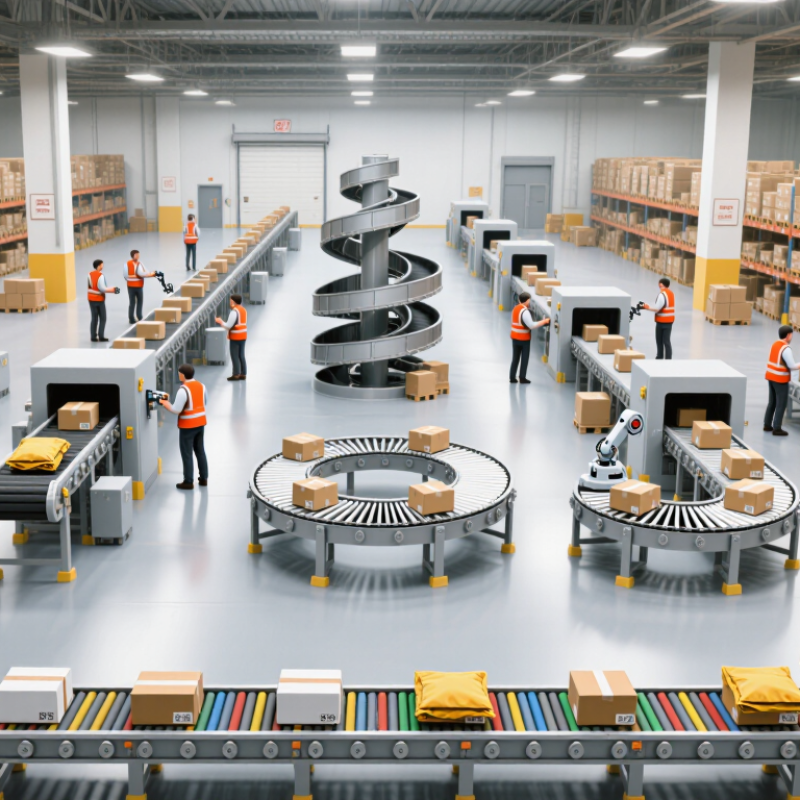
A parcel sorting system moves packages from a shared conveyor to the correct dispatch lane. Scanners read barcodes, while cameras or dimensioners capture parcel size and orientation. Control software matches each parcel to a destination, then activates a belt, wheel, or sliding shoe to divert it. The 2023 Parcel Shipping Index reported 161 billion parcels worldwide in 2022. At that scale, even a small scanning delay can create a visible queue. The process looks simple. It isn’t always.
In a typical facility, parcels arrive in mixed shapes and travel past fixed scan points. A successful read triggers routing instructions; a missed or damaged label may send the item to manual review. Throughput depends on more than conveyor speed. Poorly spaced parcels, changing package dimensions, and jammed chutes can all reduce performance. Sorting equipment needs maintenance and sensible operating rules, not just faster motors.
Tips: Keep labels facing upward where practical, and leave space between parcels at induction. Track no-read rates alongside parcels per hour; speed alone can hide recurring errors. Test unusual package shapes before peak periods. A system can still misroute parcels, and that deserves regular review.
Modern parcel sorting combines scanning, measurement, and controlled movement. Cameras read labels while dimensioning sensors estimate each parcel’s length, width, and height. Weight data can help identify mismatches before an item reaches a chute. Small details matter. A wrinkled label or glossy plastic sleeve can weaken a scan, so reliable systems allow for retries and manual review.
Conveyor belts, rollers, and diverters move parcels toward assigned destinations. Photoelectric sensors track gaps and detect jams; programmable controls adjust belt speed to keep items spaced apart. The software matches scan data with routing rules, then signals a diverter at the right moment. That sounds simple. In practice, irregular boxes, soft mailers, and overlapping parcels can disrupt timing, especially during peak periods.
Modern systems also use machine vision to identify package shape and orientation. This can reduce dependence on perfectly placed labels, though lighting and surface glare still affect results. Exception lanes are important: they give staff room to inspect unreadable or unexpected parcels without stopping the whole line. Operators should compare scan accuracy, jam frequency, and chute workload across shifts. A fast line is not automatically a better one; maintenance access and clear recovery procedures are easy to underestimate.
Choosing a parcel sorting system starts with the work it must handle, not its advertised maximum rate. Record parcels per hour during ordinary shifts and seasonal peaks. Note the mix of small boxes, soft mailers, and irregular packages. Peak hour matters. A system sized only for an average day may create queues when volume jumps. Measure available floor space, conveyor routes, and the distance workers carry exceptions. A few tight turns can affect flow more than a glossy throughput figure suggests.
Compare how each system identifies parcels, directs them to destinations, and handles unreadable labels or incorrect dimensions. Ask for performance data using parcel sizes and volumes similar to yours. Check whether the controls connect reliably with existing scanning and warehouse software. Review jam-clearing access, operator training, spare-parts availability, and maintenance requirements. These details shape daily uptime. No scorecard captures every awkward exception, so include real operating scenarios in demonstrations. I would still leave room for a little uncertainty; forecasts rarely match every shift.
Tips: Walk the proposed layout with operators before choosing equipment. Track mis-sorts, manual touches, and downtime during a trial. Ask who responds when a lane fills or a scanner fails. Compare total operating costs, not just purchase price, and verify that future volume estimates reflect your actual order patterns.
Estimated average sorting rate required for different parcel volumes per shift.
Rates are calculated by dividing each shift volume by an 8-hour shift. Actual system capacity should also account for peak periods, downtime, parcel mix, and operating conditions.
Parcel volumes keep changing, so a sorting system must fit both today’s flow and likely peak demand. Seven leading options in 2026 include cross-belt, tilt-tray, sliding-shoe, narrow-belt, pop-up-wheel, robotic, and manual-assisted sorting systems. Each handles parcels differently. The right choice depends on package size, destination count, available floor space, and the accuracy of incoming data.
Cross-belt and tilt-tray systems can route many parcels across numerous destinations, but need careful setup and maintenance. Sliding-shoe sorters suit steady flows of cartons and bags; narrow-belt designs can handle varied parcel shapes. Pop-up wheels offer modular routing, while robotic systems can adapt to changing layouts. Manual-assisted systems remain useful for smaller facilities or unusual items. A fast machine is not automatically a good fit.
Before choosing, measure actual parcel dimensions and observe busy shifts, not just average days. Track mis-sorts, jam frequency, staffing needs, and energy use during a trial. Ask how quickly belts, sensors, or software can be serviced. Small details matter: a soft mailer may behave differently from a rigid carton. No option is perfect. Forecasts can also be wrong, so leave room for adjustment and verify supplier performance claims against real operating data.
A practical comparison of common parcel-sorting system types. Suitability depends on parcel characteristics, required destinations, building layout, and the design of the complete operation; actual throughput must be confirmed for each application.
| System type | How it sorts | Parcel profile | Where it fits best | Key considerations |
|---|---|---|---|---|
| Cross-belt sorter | Individual carriers move parcels along the sorter; a powered crosswise belt transfers each parcel to its assigned destination. | A broad mix of cartons and appropriately sized irregular parcels that can be inducted as individual items. | Large operations requiring many destinations and continuous, automated sortation. | Requires careful induction, parcel tracking, and integration. System cost and layout requirements can be substantial. |
| Tilt-tray sorter | Carriers tilt to release items into a destination chute or conveyor. | Small to medium items and parcels that remain stable on a tray and can discharge cleanly. | Operations with many sort destinations, including parcel and mixed-item distribution environments. | Parcel dimensions, shape, and surface affect tray loading and discharge; irregular or unstable items may need special handling. |
| Sliding-shoe sorter | Moving shoes travel along the conveyor and gently guide items toward a selected takeaway lane. | Mostly stable cartons and parcels with suitable bases; allowable shapes and sizes depend on system design. | High-volume operations needing controlled side discharge to multiple lanes. | Needs appropriate spacing and reliable parcel orientation. Soft, highly irregular, or easily snagged items may require testing. |
| Narrow-belt sorter | Closely spaced belt sections transfer items, commonly at an angle, onto a selected takeaway conveyor. | Small and medium parcels that can be conveyed steadily and transferred without tipping or catching. | Facilities seeking automated lane sorting in a comparatively compact conveyor layout. | Transfer performance depends on parcel size, bottom condition, spacing, and the angle of discharge. |
| Pop-up wheel sorter | Powered wheels rise between conveyor rollers and divert items, often at a right angle, onto another conveyor. | Rigid parcels with a reasonably flat, stable base and dimensions compatible with the wheel layout. | Conveyor lines needing straightforward lane diversion or right-angle transfers. | Soft bags and unstable loads may not divert consistently. Parcel size and spacing affect reliable operation. |
| Pusher sorter | An actuated pusher moves a parcel sideways from the main conveyor into a selected lane or chute. | Stable cartons and other items that can tolerate a controlled lateral push. | Applications with defined parcel types and a manageable number of diversion points. | Pushing force, parcel stability, and chute design need to be matched to the load; it may be unsuitable for fragile or easily displaced items. |
| Autonomous mobile robot sorting | Mobile robots carry parcels or parcel containers between induction points and assigned destination locations. | Parcels that fit the robot’s carrier or container; oversized or awkward items may need separate processing. | Sites that value modular deployment, changing destination layouts, or reduced reliance on fixed conveyor routes. | Performance depends on fleet size, traffic management, charging, induction, and the available floor area. Building and safety requirements must be assessed. |
Selection note: Compare systems using representative parcel samples and measured requirements for throughput, destination count, peak demand, handling quality, available space, and total operating cost.
A parcel sorting system can look efficient on a floor plan and still struggle in a real facility. Before installation, measure the usable footprint, ceiling height, and distance between induction points and dispatch doors. Include space for maintenance access, not just conveyor lanes. Small details matter. A support column or uneven floor can force costly layout changes. Test the proposed arrangement with representative parcel sizes and actual staff workflows before fixing equipment in place.
Integration deserves the same attention as machinery. Confirm how the sorter will exchange order, destination, and status data with warehouse software. Agree on what happens when a barcode cannot be read or an order changes mid-process. These exceptions are easy to overlook. Run sample transactions through the full data path before launch, and record where delays or duplicate scans appear. In practice, integration issues can be harder to diagnose than mechanical faults.
Performance figures should reflect operating conditions, not only peak claims. Track parcels per hour across several shifts, including busy periods and varying package sizes. Monitor mis-sorts, recirculation, stoppages, and time needed to clear jams. A fast belt is not useful if downstream packing cannot keep pace. Leave room for adjustment after commissioning; early results may expose assumptions that looked sound during planning. Review those findings with operators, then tune the system gradually rather than chasing maximum speed.
