
The best Mirror Finish Stainless Steel Sheet in 2026 depends on where it will be used, how often it will be cleaned, and how closely its surface will be inspected. A bright sheet under showroom lighting can reveal fine scratches, waviness, or polishing marks that disappear in a small sample. Appearance matters. So do corrosion resistance, thickness, fabrication needs, and protective-film quality.
Market conditions also shape the choice. World Stainless reported that global stainless-steel crude production reached 58.4 million tonnes in 2023, a 4.6% increase from 2022. That figure signals a broad, active industry, but it does not identify one universally superior mirror finish. ASTM A480/A480M describes a No. 8 finish as a highly reflective, polished surface; buyers should still confirm the supplier’s finish description and inspect a representative sample. “No. 8” alone is not a guarantee of identical reflectivity.
Materials authority J.R. Davis, editor of the ASM Specialty Handbook: Stainless Steels, provides a useful selection lens. A fair paraphrase of its materials-selection guidance is: “Match the material to its service conditions before choosing the shine.” This is a paraphrase, not a verbatim quotation. A small qualification is easy to miss: the most mirror-like option may not be the most practical one. This guide compares finish consistency, grade, durability, and cost, helping you choose with evidence—not gloss alone.
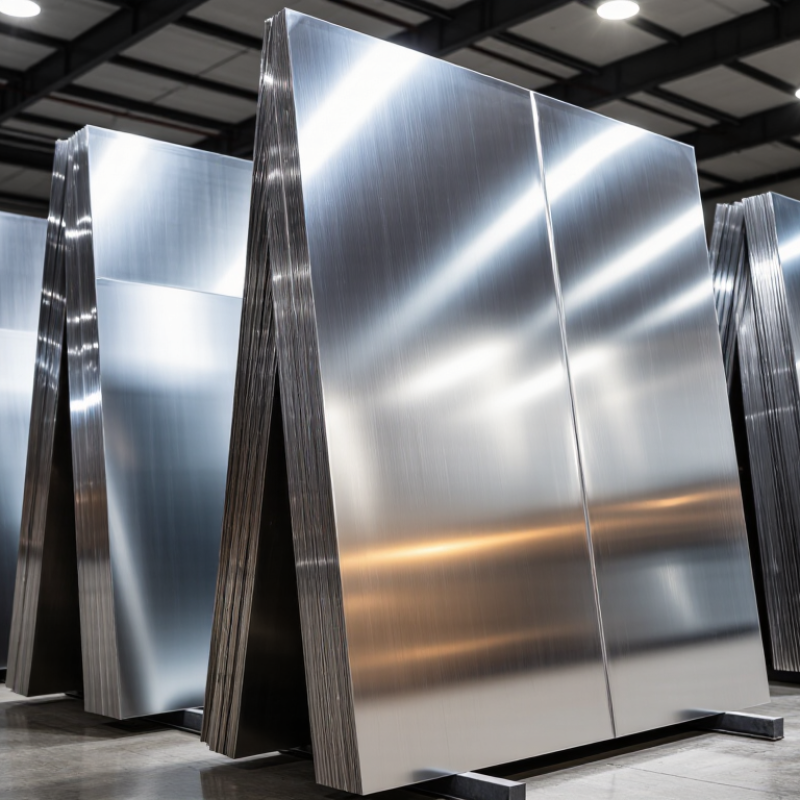
A mirror-finish stainless steel sheet is defined by its surface, not by a steel grade. ASTM A480/A480M describes No. 8 as a highly reflective, polished finish. It does not set one universal gloss or roughness threshold. That distinction matters. Two sheets may both be sold as “mirror,” yet show different reflections under the same overhead light.
The finish comes from progressively finer polishing, which reduces visible scratches and directional marks. Inspect the sheet at an angle. A clear reflection, even brightness, and minimal haze are practical checks. So is the reverse side: protective film can conceal handling marks until installation. Ask suppliers for the specified finish, inspection method, and measured surface roughness. Ra values help compare samples, but they cannot fully describe optical clarity.
Scale makes consistent descriptions important. The World Stainless Association’s Stainless Steel in Figures 2024 reports 58.4 million tonnes of global crude stainless-steel production in 2023. That figure covers the whole sector, not mirror-finish output. A useful specification should therefore state the alloy separately from the surface finish. Include sample approval under the intended lighting. Small waviness can distort reflections across a large wall. And “mirror” is not always perfectly mirror-like.
Mirror finish is not one universal grade. ASTM A480/A480M defines mill-finish categories, including No. 8, a highly reflective finish produced through progressively finer polishing and buffing. No. 4, by contrast, has visible directional lines and is not a true mirror surface. Buyers should specify the finish standard, sheet thickness, and inspection conditions, rather than relying on “mirror grade” alone. The International Stainless Steel Forum’s Stainless Steel in Figures 2024 reports 58.4 million tonnes of global stainless-steel melt-shop production in 2023, showing the scale of the material supply behind these varied finishes. That figure describes production, not mirror-sheet quality.
Production typically starts with a smooth, clean surface. Abrasive belts remove rolling marks, then finer abrasives reduce scratches before buffing creates stronger reflectivity. Any embedded grit or uneven pressure can leave streaks, pinholes, or cloudy patches. Surface roughness values such as Ra help describe texture, but they do not fully measure image clarity. Ask suppliers for a physical sample and define how reflection will be checked. A sample may look flawless under showroom lights, then reveal haze beside a window. That distinction matters. ASTM terminology helps specify the finish, but lighting, handling, and inspection criteria still need to be agreed upon.
For mirror-finish sheets, 304 is a practical starting point for indoor fittings, display panels, and clean architectural details. ASTM A240/A240M specifies 304 at 18–20% chromium and 8–10.5% nickel. This chemistry supports corrosion resistance and makes the grade widely suitable for fabrication and polishing. ASTM A480/A480M identifies No. 8 as a bright, highly reflective finish. Still, the finish depends on polishing quality, not grade alone.
316 is worth considering where salt spray or cleaning chemicals may reach the surface. ASTM A240/A240M lists 2–3% molybdenum in 316, which improves resistance to chloride-related corrosion. For dry indoor use, that added alloying may not justify the cost. 430 offers another option for interior trim; its 16–18% chromium and low nickel content can suit decorative applications, though it generally provides less corrosion resistance than 304 or 316. Finish matters, too. A fine scratch can show clearly under bright lights. I would compare sample panels under the actual lighting and cleaning conditions; a grade label alone is not enough.
Which Mirror Finish Stainless Steel Sheet Is Best in 2026?
Mirror finishes can look similar on a sample, but they do not guarantee equal service life. ASTM A480/A480M describes No. 8 as a highly reflective, polished finish; it does not rate corrosion resistance. That depends more on the steel grade, exposure, and fabrication. A mirror surface is not magic.
For cleanability, the European Hygienic Engineering & Design Group’s Document 8 uses Ra ≤0.8 μm as a typical benchmark for product-contact surfaces. A fine mirror polish can meet or exceed that smoothness, helping reduce places where residue collects. But this food-equipment benchmark is not a promise of outdoor performance. Salt spray, pool chemicals, and coastal air still matter.
Maintenance shows the trade-off. A smooth finish is easier to wipe, yet fingerprints and fine scratches stand out under bright light. Use a soft cloth, mild detergent, clean water, and a dry wipe; abrasive pads can dull the reflection. In my experience, choosing the most reflective sheet for a busy doorway can be a mistake. Request the alloy and finish specification, then test a sample in the actual lighting and cleaning routine. The sample may still mislead.
| Option | Typical Appearance | Durability and Corrosion Resistance | Scratch Visibility | Maintenance | Commonly Suitable Uses | Best Fit |
|---|---|---|---|---|---|---|
| No. 8 mirror finish on 316 stainless steel | Highly reflective, polished surface; reflection quality depends on the polishing process and sheet quality. | 316 generally resists chloride-related corrosion better than 304 because it contains molybdenum. The mirror finish does not make the steel immune to corrosion. | Fine scratches, fingerprints, and water spots can be conspicuous on the reflective surface. | Clean regularly with a soft cloth and a mild, non-abrasive cleaner. Rinse off salt and chloride deposits; avoid steel wool and abrasive pads. | Decorative interiors, architectural details, and applications where a bright appearance and improved chloride resistance are both important. | Best of these options for a mirror appearance in coastal or chloride-exposed settings, provided the grade is appropriate for the actual exposure. |
| No. 8 mirror finish on 304 stainless steel | Highly reflective, polished surface with a bright, mirror-like appearance. | 304 offers good corrosion resistance in many indoor and ordinary outdoor environments. It is generally less resistant to chloride exposure than 316. | Scratches and smudges are readily visible, as on other mirror-polished surfaces. | Use a soft cloth and mild cleaner; wipe in the direction of the finish where visible polishing lines are present. Remove contaminants promptly. | Interior wall panels, display areas, furniture details, and other decorative applications away from persistent salt exposure. | A versatile choice for many indoor projects when a highly reflective look is required. |
| Bright annealed (BA) finish on 304 stainless steel | Bright and reflective, but typically not as mirror-like as a mechanically polished No. 8 surface. Appearance varies with production and handling. | Corrosion resistance is primarily determined by the 304 alloy and the service environment; the reflective finish does not provide a substitute for selecting the right grade. | Marks may show on the bright surface, though the appearance is not necessarily identical to a polished mirror finish. | Clean with non-abrasive materials and avoid harsh cleaners that could damage the surface. | Equipment panels, formed components, and applications needing a bright, smooth appearance without the strongest mirror effect. | A practical option when a bright finish is desired but a full mirror effect is not essential. |
| No. 8 mirror finish on 430 stainless steel | Can provide a highly reflective appearance when polished; the finish itself does not change the alloy’s corrosion characteristics. | 430 is a ferritic stainless steel and is magnetic. Its corrosion resistance is generally lower than that of 304 and 316, especially in demanding or chloride-rich environments. | Scratches and fingerprints are conspicuous on the reflective surface. | Keep clean and dry where practical. Avoid prolonged exposure to salt, chlorides, and corrosive residues; use non-abrasive cleaning tools. | Decorative indoor uses and other relatively mild environments where the specified alloy is suitable. | Consider for indoor decorative applications where its appearance and magnetic properties are acceptable and exposure is mild. |
| No. 8 mirror finish on 201 stainless steel | Can be polished to a bright, mirror-like appearance; reflectivity depends on processing and sheet quality. | 201 is a lower-nickel austenitic grade. Its corrosion resistance can be adequate in suitable indoor environments, but it should not be assumed to match 304 or 316 in more corrosive conditions. | Fine scratches and fingerprints are easy to notice on a mirror-polished surface. | Use mild, non-abrasive cleaners and remove moisture or contaminants. Confirm suitability for the intended environment before specifying. | Selected indoor decorative applications where the environment is controlled and the grade is verified for the use. | Consider only when the project conditions, grade specification, and maintenance plan are compatible. |
Selection note: “No. 8” and “BA” describe different surface finishes, and finish terminology or appearance can vary by producer. Corrosion performance depends mainly on the stainless steel grade, exposure, fabrication, and cleaning practices. Review a physical sample and confirm the applicable material and finish specification before ordering.
Which mirror finish fits different uses in 2026? The answer depends on viewing distance, cleaning habits, and exposure to moisture. A bright No. 8 finish gives interiors a crisp, near-reflective surface. It suits elevator panels, feature walls, and shop displays where people stand close. Small scratches show easily, though. For busy areas, a softer reflective finish can look cleaner between wipe-downs.
Kitchens and bathrooms need more than shine. Choose a suitable stainless steel grade for the expected moisture and cleaning products; the finish alone does not prevent corrosion. For exterior panels, check the environment with a qualified supplier, especially near salt or chemical exposure. A mirror sheet can look striking outdoors, but glare, water marks, and visible surface wear may make it less practical than expected. There is no perfect mirror. That is worth considering before ordering.
Tips: Ask for a sample and view it under the lighting used in the finished space. Check the reflection, edges, and protective film. Handle sheets with clean gloves, and avoid dragging them across benches. Confirm thickness, grade, and cleaning guidance on the product specification. A sample can still differ slightly from a large installed panel.
