
Choosing glass fiber aerogel insulation sheets in 2026 takes more than comparing a product photo or a single thermal-conductivity figure. The right choice depends on the equipment, available space, operating temperature, and exposure to moisture or vibration. Small details matter. A sheet wrapped around a warm pipe may need different flexibility and facing materials from one fitted inside an equipment enclosure. Start by checking the manufacturer’s datasheet for thermal performance, service-temperature limits, thickness, density, and installation guidance. Test conditions matter, too. Figures measured under different conditions may not be directly comparable.
A Glass Fiber Felt Aerogel Pack Insulation Sheet combines an aerogel insulating layer with a glass-fiber felt structure, but products can still differ in construction and performance. Check whether the sheet can be cut, bent, or compressed without compromising its intended use. Ask about edge treatment and protective facings if fibers may be exposed during handling. Fit matters. A poorly fitted sheet can leave gaps around corners, seams, and fasteners, reducing the benefit of the material. I would not choose by price alone, though that is an easy trap. Instead, compare documented specifications, confirm compatibility with the application, and request clarification from the supplier when a rating or test method is unclear. Real installations are rarely perfect. Allow room for careful measurement, safe handling, and a final fit check before relying on the insulation system.
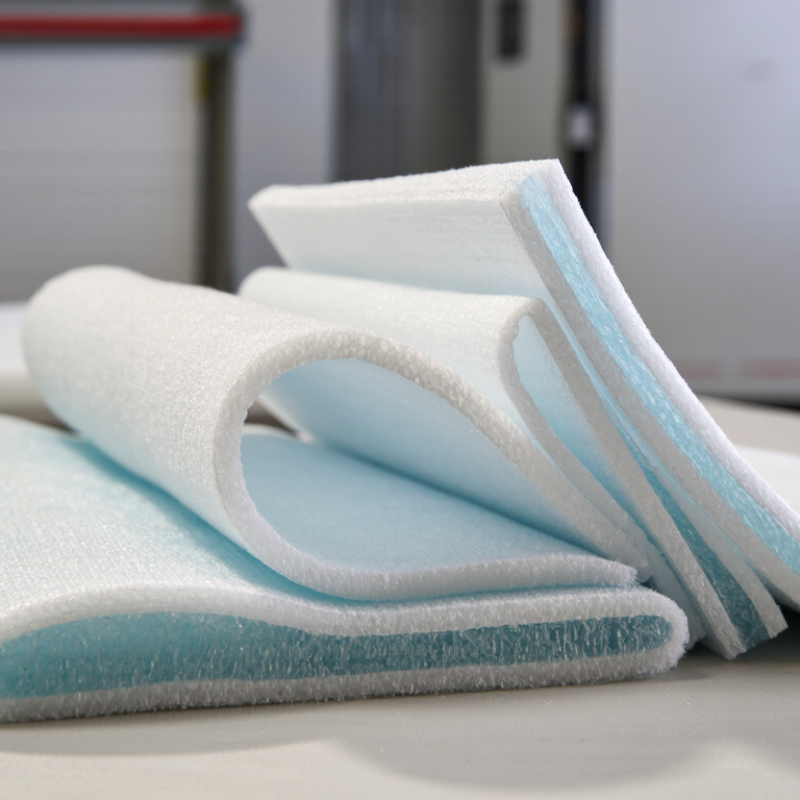
Glass fiber aerogel insulation sheets are thin composite blankets made from porous aerogel and a glass-fiber support. Many use silica aerogel, whose tiny pores slow heat transfer through the material. The fibers help the fragile aerogel form a sheet that is easier to handle and fit around equipment or building details. Despite the name, it is not a solid pane of glass. It is often lightweight, matte, and somewhat flexible. Construction varies by product.
These sheets can provide substantial insulation in limited space, but performance depends on thickness, temperature, compression, and installation quality. Poorly sealed seams can let heat bypass the insulation. Moisture exposure and surface coverings also matter, so check the product’s technical data rather than relying on a general description. That part is easy to overlook. I would not assume every sheet suits every pipe, wall, or operating temperature.
Tips: Compare thermal conductivity at the stated test conditions, then check temperature limits, facing, and moisture guidance. Handle cut edges carefully and follow the supplier’s installation instructions. A small sample can reveal whether the sheet bends neatly around corners—or proves awkward in practice.
2026 How to Choose Glass Fiber Aerogel Insulation Sheets
How Glass Fiber Aerogel Sheets Reduce Heat Transfer
Glass fiber aerogel sheets slow heat transfer through a combination of materials. The aerogel’s fine, porous structure limits heat moving through trapped gas. Its low thermal conductivity can help reduce heat flow through walls, equipment, and pipework. Glass fibers reinforce the fragile aerogel, making the sheet easier to handle and fit. The fibers also help the material keep its shape. Small details matter.
Heat can still travel through gaps, compressed sections, or metal fasteners. A poorly fitted sheet may perform far below its published rating. Around a warm pipe, for example, open seams can create narrow paths where heat escapes. Careful cutting and close-fitting joints help maintain a more continuous insulating layer. Moisture and operating temperatures also deserve attention; performance depends on the conditions around the installed sheet.
When comparing products, check thermal conductivity values and the temperature range stated in technical documents. Compare results measured under similar conditions. Thickness alone does not tell the whole story. Ask how the sheet handles compression, moisture, and repeated handling. A thinner sheet may suit a tight space, but only if its rated performance meets the application’s needs. Aerogel is not magic. Installation quality and the surrounding assembly still need a second look.
| Selection or performance dimension | Indicative data or comparison | How it affects heat transfer and selection |
|---|---|---|
| How the material reduces heat transfer | ||
| Thermal conductivity (λ) | Many aerogel-fiber blanket products report values around 0.018–0.023 W/(m·K); the actual value depends on product, temperature, density, and test method. | Lower conductivity means less heat flows through a given thickness. Compare products using values measured at similar mean temperatures and under the same test method. |
| Heat-transfer mechanism | Silica aerogel has a highly porous structure; glass fibers provide a flexible reinforcing matrix. | The fine pore structure restricts gas movement, while the solid network and pores limit different paths for heat conduction. The sheet reduces, but does not eliminate, heat transfer. |
| Thickness and thermal resistance | For a material with λ = 0.020 W/(m·K): 10 mm gives R ≈ 0.50; 20 mm gives R ≈ 1.00; 25 mm gives R ≈ 1.25; 50 mm gives R ≈ 2.50 m²·K/W. | Calculated using R = thickness ÷ λ. Increasing thickness increases the insulation layer’s resistance approximately in proportion, assuming the same conductivity and no gaps or compression. |
| Illustrative heat-flow comparison | At a 20 K temperature difference, a 25 mm layer with λ = 0.020 W/(m·K) has an idealized heat flow of about 16 W/m². A 25 mm layer with λ = 0.035 W/(m·K) gives about 28 W/m². | The aerogel example is about 43% lower in this simplified comparison. It assumes one-dimensional steady heat flow through the insulation only; it excludes surface films, joints, fasteners, and thermal bridges. |
| Choosing a sheet for the application | ||
| Available thickness | Common sheet or blanket formats are product-specific; thickness options may range from a few millimeters to several tens of millimeters. | Choose the thickness from the required thermal resistance and available space. Check the installed thickness, since compression can change performance. |
| Operating temperature | Temperature limits vary substantially by formulation, facing, binder, and installation. Use the supplier’s declared continuous and short-term limits. | Confirm that the sheet, seams, adhesives, and facing are suitable for the highest expected service temperature—not just the aerogel component alone. |
| Moisture and vapor exposure | Water absorption, vapor permeability, and any hydrophobic treatment are product-dependent. | For damp or outdoor conditions, verify moisture data and specify a compatible vapor or weather barrier where needed. Moisture can affect the performance of an insulation assembly. |
| Thickness tolerance and compression | Check declared nominal thickness, tolerance, and any compression or recovery data for the product. | Gaps, crushed areas, and uneven joints can create local heat-flow paths that reduce the benefit of the specified insulation thickness. |
| Handling and installation | Sheets may be cut and fitted with suitable tools; dust-control and personal protective measures depend on the product and its safety documentation. | Follow the product’s installation instructions and safety data. Seal joints appropriately and avoid leaving exposed gaps around edges, penetrations, or fixings. |
| Fire and smoke performance | Fire classification and smoke behavior depend on the complete sheet, including fibers, binders, facings, and coatings. | Request test results for the exact product and intended assembly. Do not infer system fire performance from the aerogel ingredient alone. |
| Verification of thermal data | Common guarded or heat-flow-meter methods include ASTM C518 and ISO 8301; confirm the exact standard, test conditions, and reported mean temperature. | Use comparable, independently tested values where available. A conductivity figure measured under different conditions may not be a direct like-for-like comparison. |
| Project-specific choice | Compare conductivity, required thickness, service temperature, moisture conditions, fire requirements, installation details, and total system cost. | Select the sheet for the complete assembly and operating environment. Product data and project calculations should be checked before specification. |
Note: Thermal values and product properties shown are indicative, not guaranteed specifications. Verify current technical data for the exact sheet and installation. Calculated resistance and heat-flow examples are idealized and do not include surface resistances or thermal bridges.
Choosing glass fiber aerogel insulation sheets starts with the conditions around the pipe, vessel, or wall. Thermal conductivity matters, but compare values measured at similar temperatures and thicknesses. A small number on a datasheet does not guarantee the same result in a real assembly. Check the intended service temperature, too. Hot surfaces can change performance and may require additional protective layers.
Fit matters. Measure available space, bends, joints, and likely compression before selecting sheet thickness. On site, installers often find that gaps around valves and seams undermine an otherwise well-insulated run. Pay attention to flexibility, tensile strength, and resistance to handling damage. Also review water repellency and vapor behavior if condensation or outdoor exposure is possible. Details matter.
Fire performance, smoke characteristics, and dimensional stability should match the project’s requirements and the test methods used to verify them. Ask for current test reports, not only product summaries. I would not choose by conductivity alone; that shortcut is tempting, and sometimes wrong. A thinner sheet may save space but complicate installation. Compare the full assembly, including facing, fasteners, and protective cladding. One final check: confirm that the stated performance applies to the thickness you plan to install.
For glass fiber aerogel insulation sheets, choose thickness against the required heat-loss limit, operating temperature, and available clearance. Do not select by thickness alone: check the product’s tested thermal conductivity at a temperature close to your operating conditions. The U.S. Department of Energy’s Insulation Fact Sheet lists conventional fiberglass at roughly R-3.1 to R-3.4 per inch. That is a useful reference point, not a substitute for aerogel-sheet test data. Confirm the stated units and test method before comparing products. Small details matter.
Match the sheet format to the surface. Flat panels suit broad, accessible walls; narrower pieces can reduce trimming around pipes, valves, and supports. Measure the actual surface, including bends and overlaps, then allow for seams and fastening space. A neat drawing can still mislead. Compression, gaps, and poorly fitted joints may undermine the intended thermal performance, so check the installation instructions and plan seam placement before ordering. For curved equipment, verify that the sheet can follow the radius without lifting at the edges. Allow room for cladding and access panels, too. The best fit is not always the thickest sheet; tight clearances can make installation awkward.
2026 How to Choose Glass Fiber Aerogel Insulation Sheets
Before buying, match the sheet’s tested thermal conductivity to your design temperature and required thickness. Ask for a current test report, not only a catalogue value. ASTM C518 is one recognized method for measuring steady-state thermal transmission. Compare results only when test conditions and thickness are alike. Small differences matter. Check the stated service-temperature range, density, dimensions, and whether the product is intended for your installation environment.
The 2023 Global Status Report for Buildings and Construction, published by UNEP and GlobalABC, reports that buildings used 34% of global energy demand in 2022. That figure is not a product-performance claim, but it shows why insulation choices deserve careful checking. Also review water absorption, vapor behavior, and fire-test documentation. A fire classification does not mean a sheet is fireproof. I would verify that test results apply to the complete sheet, including its glass-fiber facing.
Before installation, inspect the substrate for moisture, dust, and sharp edges. Measure around pipes and corners; uneven cuts can leave cold gaps. Follow the supplier’s stated overlap or joint-sealing method, and avoid compressing the sheet unless the installation instructions permit it. Check ventilation and protective equipment guidance when cutting, since fibers and dust can irritate skin or airways. One detail is easy to miss: confirm the adhesive or facing is compatible with the operating temperature. I would still check a small area first.
